-
Summer

From now on, in the evening
After I put my children to bed
I can slip into my old running shoes
And hurry across the street to an old reservoir
To watch the sunset.
I always have company:
A woman in a yellow boho blouse
A teenage boy on a squeaky bike
A couple with a glass of red for two.
We stand not too close to each other
And soak in the orange light
While slowly turning
Opposite from the sun.
-
March 26
One of my favourite books is The Book of Delights. Every time I come across something that makes my heart flutter, if only for a moment, I whisper “Delight!” and smile as if it was an inside joke.
I am getting good at this. This morning I stopped on the corner to listen to the choir of local birds: sparrows, cardinals, juncos, robins and a lonely white-breasted nuthatch.
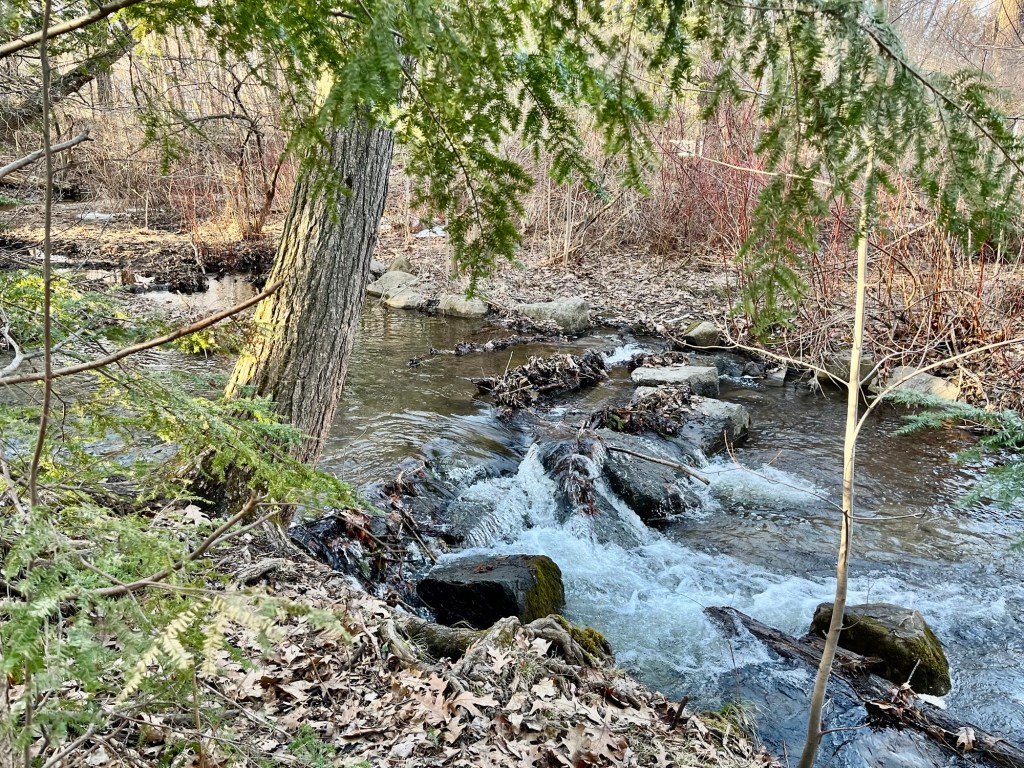
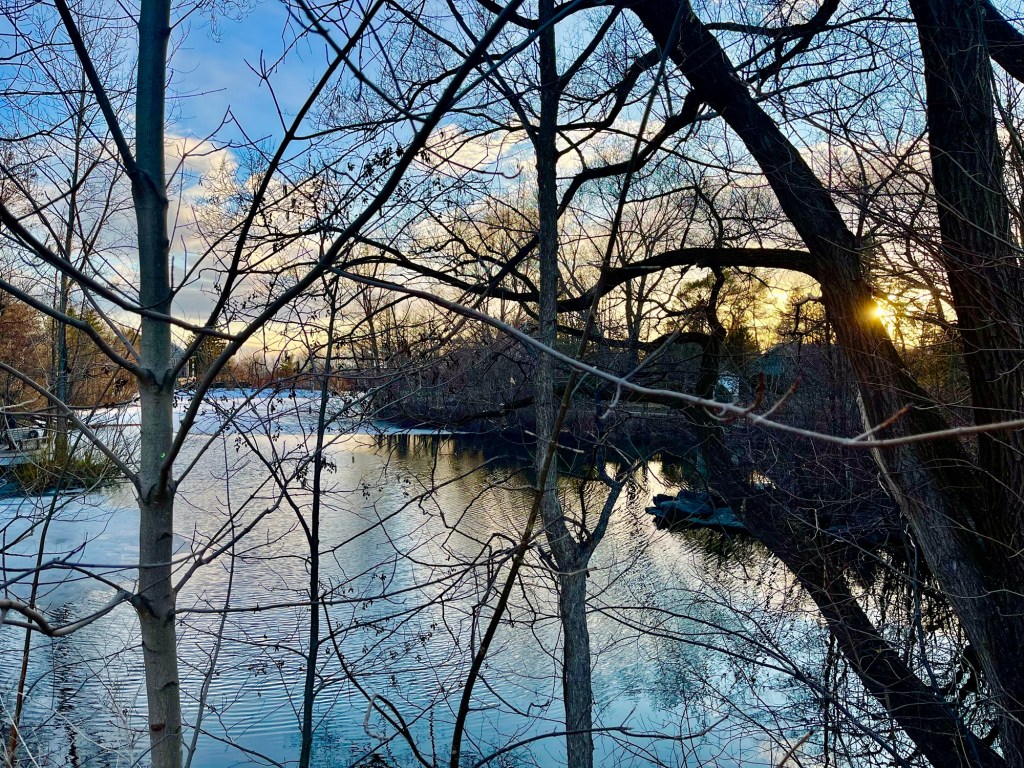
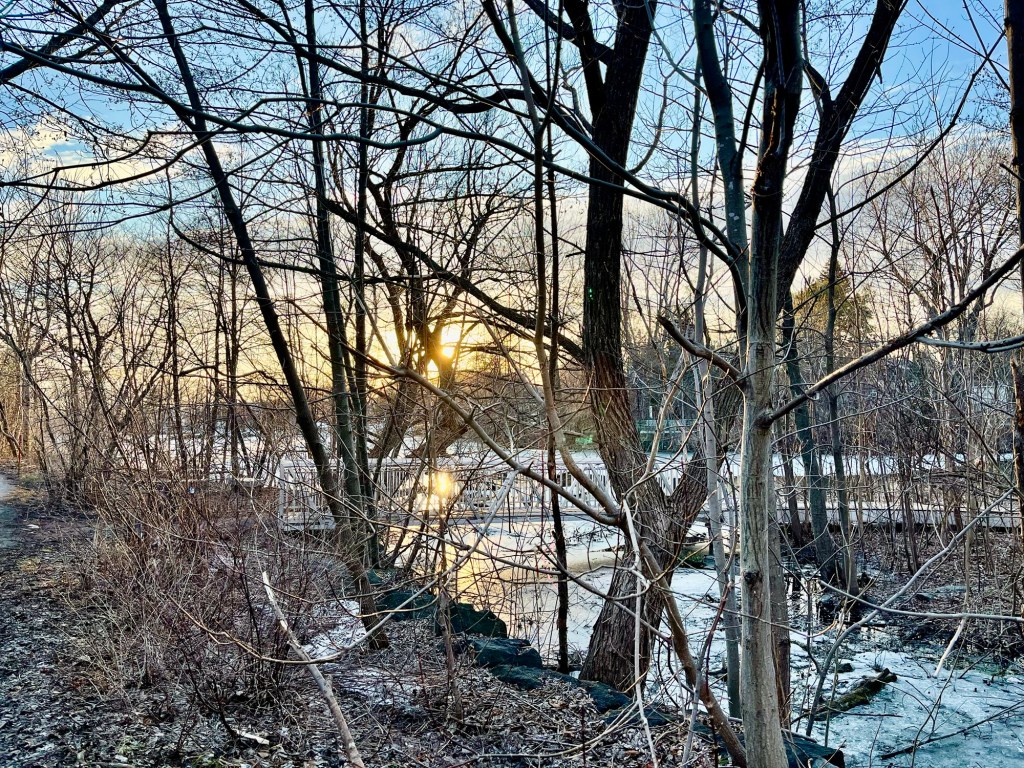
I went for another walk in the evening delighting in the fact that an evening walk no longer means a walk in the dark. I delighted at the sight of the thinning ice and the joyful little brook that was still and frozen only two weeks ago.
Walking in the early spring is a little bit like living in reverse: the world around looks like late autumn, except it is full of hope.
Autumn, which I love dearly, is always tinged with regret and a feeling of inevitability. Winter is always death. Spring is the awakening of the spirit. Those are the teachings of the Medicine Wheel and they are also the teachings of my people.
My people used to celebrate the new year in March and count their age in Springs and in Summers. My people used to know the spirits that lived in the brooks. They were female spirits, the tricksters. We called them Mavkas.
Mavkas used to disguise themselves as beautiful women and seduce village boys. Sometimes they would do it for laughs, sometimes out of revenge and sometimes they would fall in love. In these cases, it was always the humans who betrayed them.
My ancestors used to believe that the universe was feminine. The trees, the rivers, the tall grass of the steps, the soil that could sprout every kind of seed, and the stars.
Today, I have heard someone saying: what if the universe was born not in a Big Bang, but in a sensuous exhale releasing the mirriads of carbon dust particles into the womb of the great unknown.
-
March 20
This was my way to therapy today. About 45 minute walk with little pauses to pay attention.
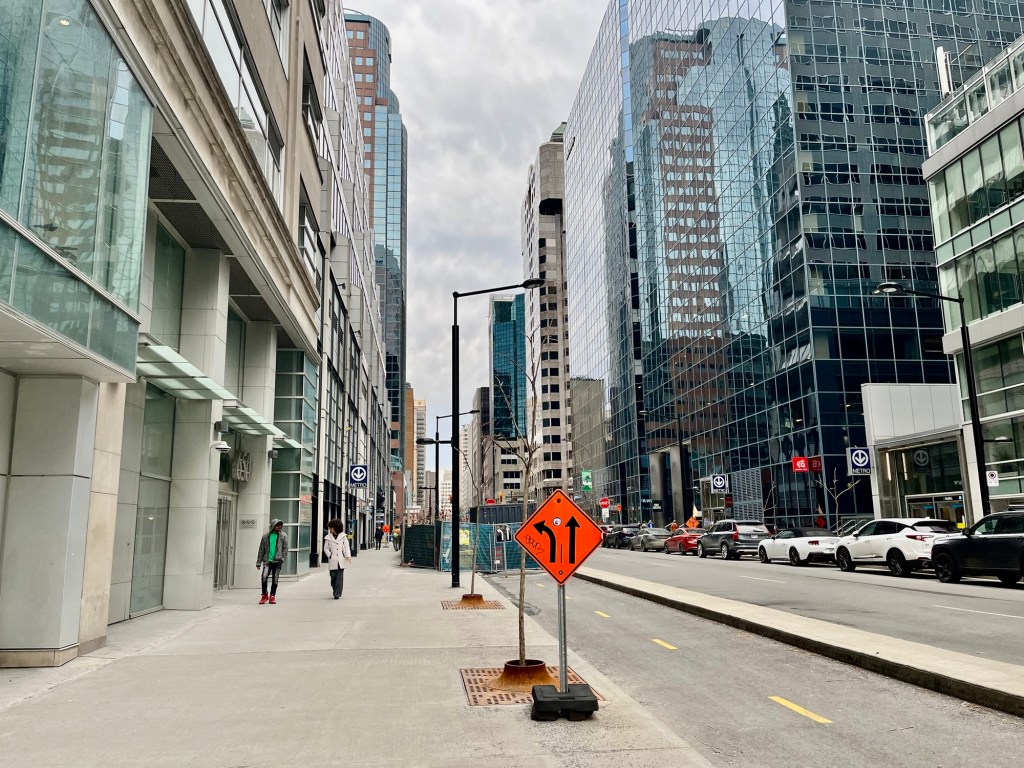
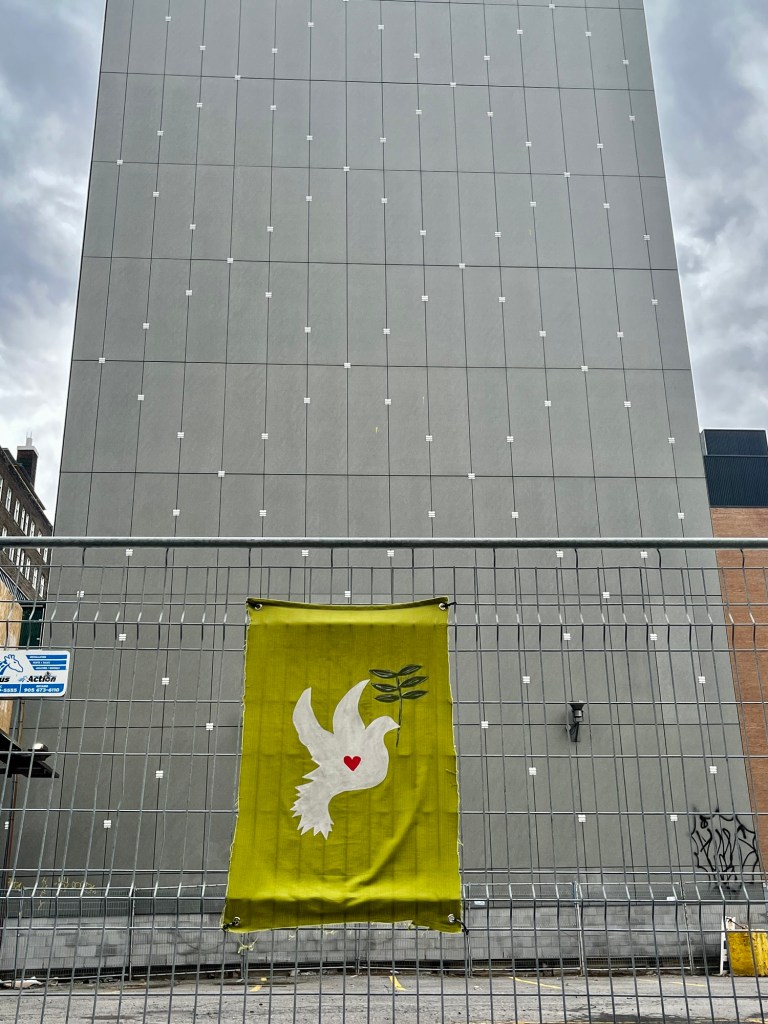


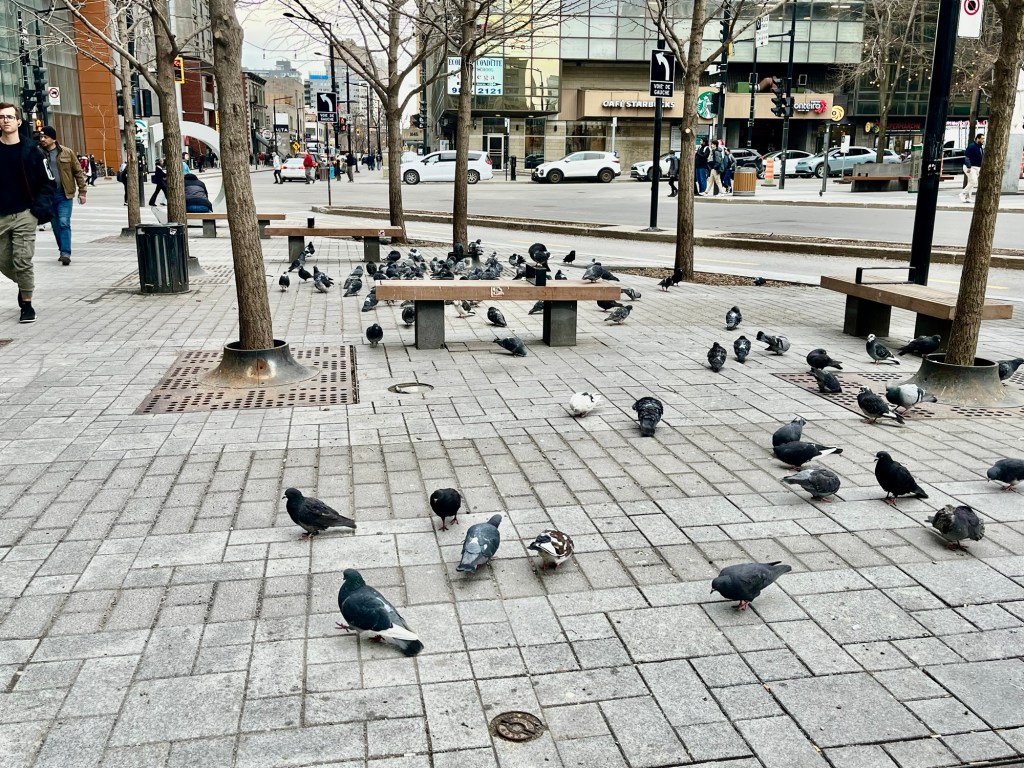
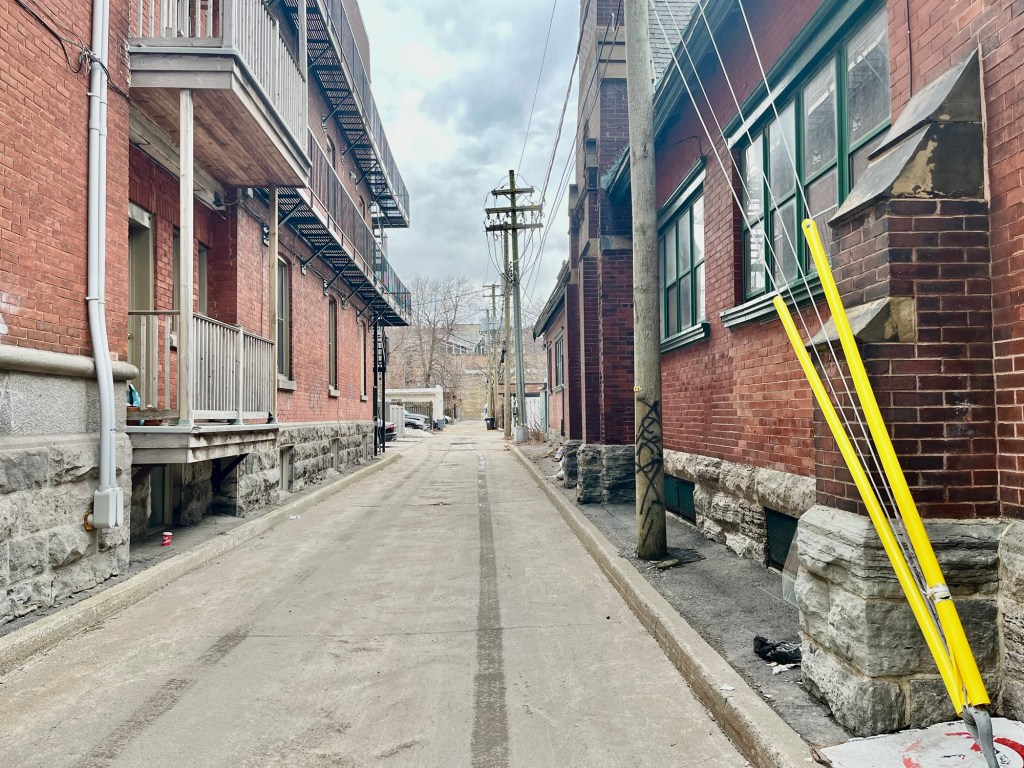
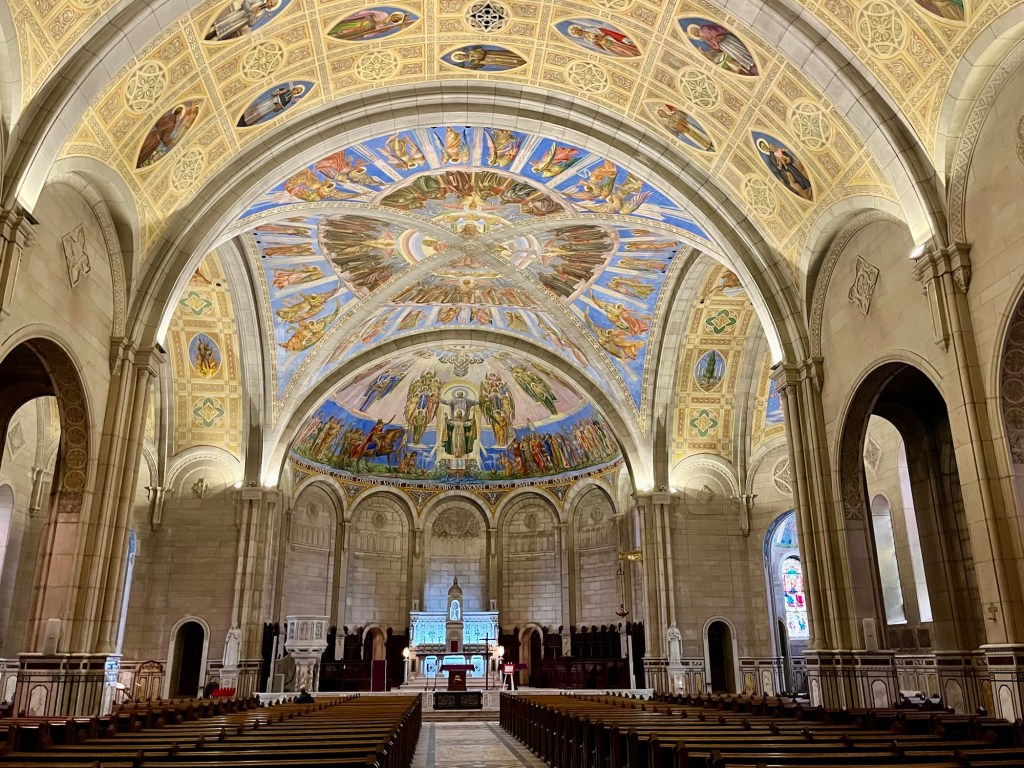
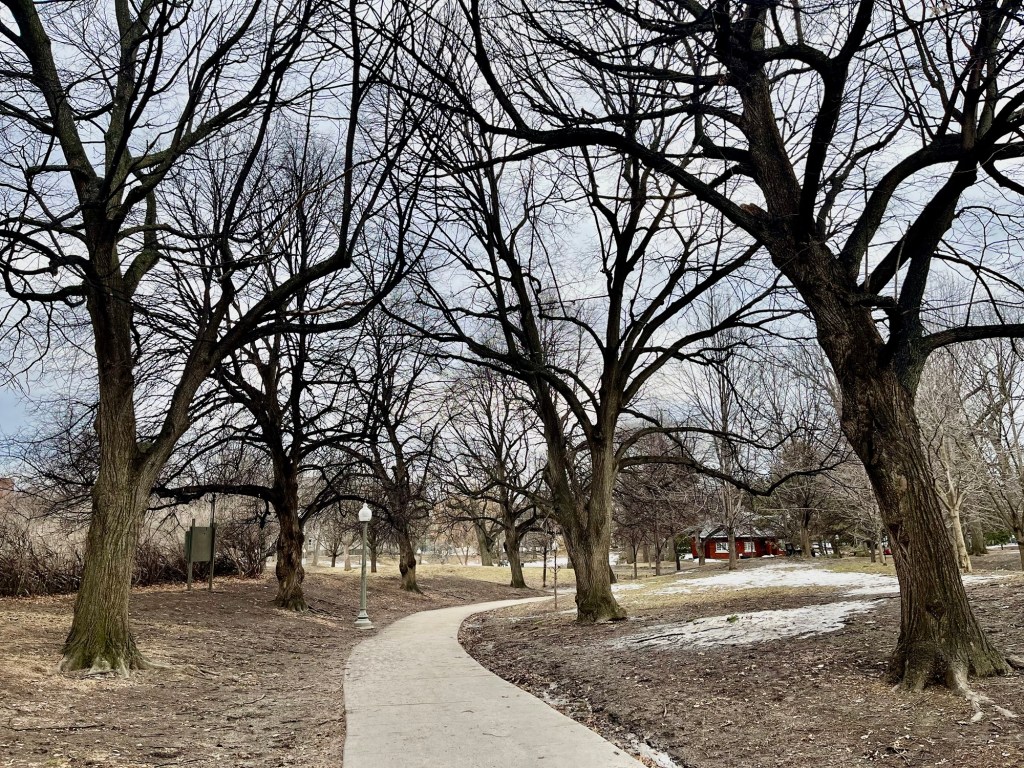
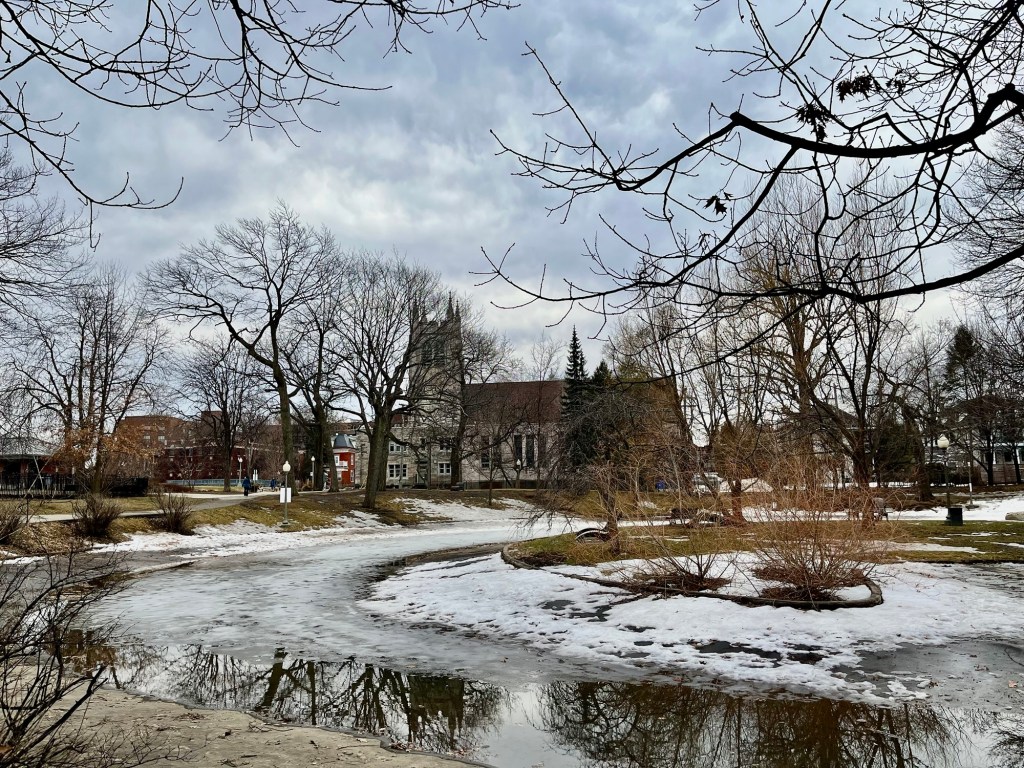
Sometimes I play this game with myself: I try to think of all the way I am connected with an object or a place I see along the way. Today, maybe because it was the beginning of spring, my therapy day or the conversations I was having, the intimacy with the city felt almost overwhelming.
-
March 18

We’ve had a row of sunny, unseasonably warm days that have melted away the snow. I am telling myself that it is way too early to believe in spring. The snow may yet return. I am checking the brownish carpet of last year’s unraked leaves, half-hoping half-afraid to see the purple heads of crocuses peeping through. Too late for caution. My body is already rejoicing. The willow on my street is also rejoicing. She is sprouting those soft fluffy buds. Where I come from, we call them kittens. Where I come from, we cut some willow branches and bring them to church on Palm Sunday to be blessed. We bring just about anything to be blessed in church, especially food for big holidays. I used to think about these traditions: how very backwards. Now I think: how very animistic.
I have learned so much over the past several months. I have learned not to get in the way of my body. To let it grieve or rejoice over the smallest things. To not question the wisdom of the smallest things. To remember my ancestors in everything. My grandmother Vira in her last years used to say she wanted to live until spring. That was the life goal – to live long enough to see the spring. I think it’s a good one. In her last years, my grandmother was lost in the labyrinths of dementia. She forgot the calendar and the people around her and the events of her own life, but she never forgot the seasons and the names of her children. The last time I saw her, I was preparing to leave for another country for a long time. I always thought it was more important to leave, than to stay. Always believed that something good was waiting for me out there. The last time I saw her, my grandmother emerged from the depths of her dementia, just for a brief moment, in a beautiful fluid motion. She looked at me with her eyes now almost devoid of colour and said: “Take care of yourself out there, baby.” I cried and I knew I would not see her again.
She died in the winter of the year that I’d left and I didn’t come back to say good-bye. This is one of the many many many things I would have done differently.
-
March 14
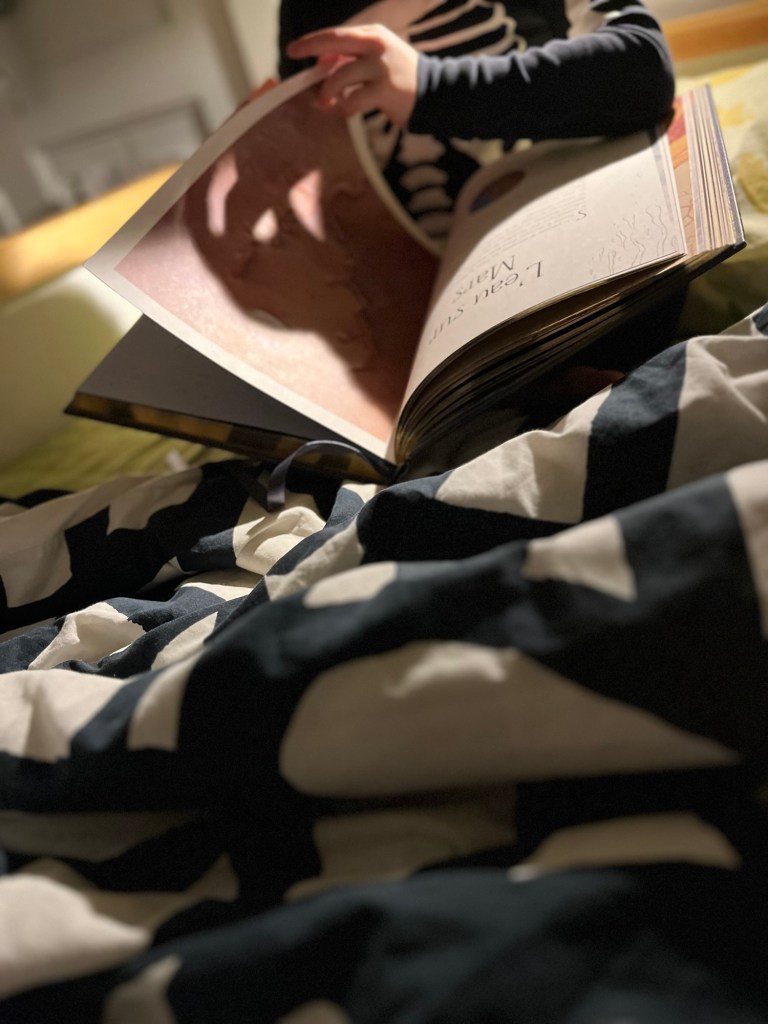
Let me count one by one the things that I am grateful for:
It is full moon
The spring came early
The birds are starting their wedding rites
We are one week away from Spring equinox
The sup is running, the water is running, my children are running on the way home from school
My son is giggling his happy laugh turning the pages of his brand new anthology of the universe
And I am reading Ada Limon’s poems next to him.
I am holding all of you in my heart. I am holding everything that is wrong. Every heartbreak. Every absence. Please, don’t think that just because I feel happy at this precise intersection of time (an evening of early spring) and space (at the foot of a child’s bed) I forgot about you.
I am tucking you in safely under the blanket. Caressing you in a circular motion. Sleep, I whisper, it will be ok tomorrow.
There will be Spring equinox, then Summer solstice. There will be long twilights after the sunset. Early mornings. Birdsong. Light bugs in the dark summer garden. It will be enough, I whisper, it will be enough.
-
March 11
I haven’t slept well tonight. I was tossing and dreaming of Jenny. Except I wasn’t dreaming as much as I was trying to access her. Blair, my spirituality teacher, says that dreaming is just another way of being in the world. He says, we have to get better at dreaming, if we want to get better at living in a conscious way. In my dreams, I was coming up to Jenny and hugging her and telling her how much I love her. In my dreams, she seemed beaming, the way I always saw her in life. she seemed happy.
In my dreams, my brain was flooded with words, the way it is always flooded with words. Endless words, enough to fill every crack in the universe, except that the cracks keep getting bigger.
In the early hour of the morning, in that state between frantic dreaming and awakening, I realized with clarity why I was hurting so much. Losing kin hurts. Kin are people who are neither your family, nor your friends, although I guess they could be both. They simply make sense. Their way of being, of moving through the world, of fighting, thinking, loving, makes sense. And because they move through the world in this way, the world also makes sense. Until they are gone and you have to get used to live in a place that is colder and emptier.
When I got up and looked at my puffy face – what a sight! – I had the same clarity. Thinking about Jenny, there is one thing that I do not regret. I have never failed to validate her. In every conversation, in every email, I always said how much I admired her, how incredible she was. When we first met, I had told her how I saw her ten years ago and how all this time I dreamed to meet her. I never held anything back. What a lesson. To know that one thing you will never regret is telling someone how you feel about them.
-
2025 Office Blues

In the morning they ask me how I am
To which I reply, heartbroken
They shrug, as if saying, still?
As if saying, you were heartbroken last week,
There is a limit, a quota, and as it comes,
You’re sucking all heartbreak out of the air
Hoarding it all for yourself
Maybe, you should leave some for others.
To which I reply, maybe.
In physics they taught us that everything ends
Eventually.
Joy, wonder, anger and sadness – everything dissipates in entropy.
But how about silence, I wonder,
How about loneliness and your overwhelming absence,
Is there an end to the end
Or does the end unfold endlessly
In the never-ending succession of lost things?
None of these subjects are suitable for morning small talk
So I shrug and ask instead
How are you?
-
March 10

Dear Jenny,
This fucking year keeps taking and taking and taking. I can’t believe you are gone. I can’t believe you were, not are. Grief seems natural in theory, but when it’s personal, it feels like water filling the air, getting into my lungs, drowning me. I am so sorry, Jenny. I am sorry that I didn’t know you enough to call you a friend. I am sorry for all those people and all those communities who lost you. I am sorry you didn’t get to grow old, didn’t get to see you girls grow old. I am sorry that this world is so imperfect and so impermanent that we can lose people we love in an instant, even before we know we’re losing them. I loved you, Jenny. It doesn’t take much to love someone this good, this intelligent and kind and determined to do as much good as they possibly can.
This week I have to write an essay about the soul. Does the consciousness exist beyond the physical? I thought I knew what I was writing about. I had my arguments lined up. Now I am staring in the grey March sky and wondering, where are you, Jenny? My ancestors believed that the soul stayed close to the body for nine days, then lingered on the earth until fourty days, before finally going wherever it is the souls are going.
If you come back, Jenny, I hope you come back as a flower, or some other beautiful creature with a gift of photosynthesis. Being human is so freakishly hard, who in their right mind would choose it? Maybe, you would.
I miss you, Jenny, I will always miss you.
-
February 25

I’ve been googling symptoms of seasonal depression, perimenopause and mild bipolar disorder. Theoretically, anything can fit. I wanted to cry at the end of the day, but thankfully the day was Tuesday and dance class. Nowadays, I like walking late at night with loud music in my earphones, especially in Saint-Bruno, where streets empty after 7pm and the crime rate is minimal. I like when people like my social media posts, I love it when they read the same books or love the same movies – I need resonance like I need air. I need one close relationship, someone I can tell stuff to, who’s not across the ocean or unavailable except once a month. I realised today that I work very hard in my relationships. I have to speak a language others understand, which is always their language. I have yo work hard to explain myself, make myself accessible and non-threatening. I want a relationship in which I am not constantly reducing myself to the simplest and most accessible version of myself. This may be the first time of my life I find myself bereft of such relationship, of honest and deep connection with someone. Friend, colleague, mentor, lover – anyone. I am suffocating in the lack of connection. So, with many wishes I am sending out to the universe, here is one selfish wish – I need someone physically and emotionally close, someone here and now.
-
February 19

I think we are heading into some very dark times. We are already in the dark times and it takes courage to admit that we don’t know what the end will be like. We don’t even know if there will be an end. This, perhaps, is the scariest thought of all. What if there is no end? What if our children inherit this dark spiral of violence, lies and betrayal not as a distant memory of trauma, but as an ever unfolding strategy. What if undoing never ends?
I am not sure that I am still anxious about the climate crisis. If we were to die in a rising tide or a hurricane of previously unseen force, it would be a more just and merciful end than killing each other with human deceit. Would you not rather be a part of the ocean?
Which makes me think of the great flood. Imagine it wasn’t an act of a vengeful and angry god, but a gesture of ultimate mercy. Imagine that the flood came as a relief to those too weary to seek justice. Imagine, as it swept over the streets, people finally stopped running and welcomed it. Mothers hugged their children and men hid their tears of relief waiting for the flood to finally wipe everything clean.
-
Subscribe
Subscribed
Have a WordPress.com account? Log in now.

