-
November 4
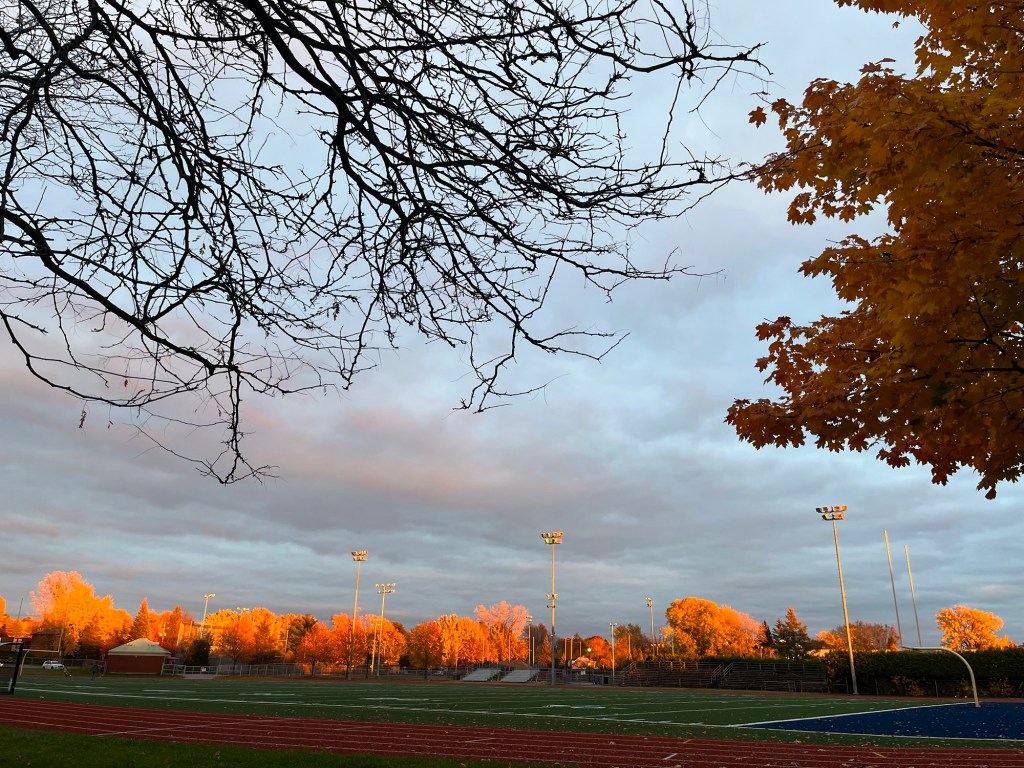
I almost prefer November to October, because now we’ve done the active dying part and can be at peace with death.
A few remaining leaves will detach from their branches and fall quietly, some time in the dark that now takes a bigger part of the day.
After the heartbreak of October comes the slumber. It’s the giving up of something you can no longer hold on to. It is dispossession and liberation.
It is a good time to let go of the expectations, just before the countdown, before an arbitrary frontier between old and new year jerks us back to the wishing/hoping mode.
Rest well.
-
September 24
The neighbourhood is dressed in fog for the second day in a row. I love the fog, its elusiveness, the self-assured way it swallows the street and the forest behind it, the way it gives in as I approach, revealing just enough. What it reveals is that the trees, overnight, became more orange than green. If it were in broad sunlight, I would call it autumn, but through the fog’s thin grey veil all I see is the death of summer. How considerate, I say to myself, to mute the colours and smooth the edges, to slow the time, to accompany the grief and the transition. Long time ago, when I lived by the Mediterranean Sea, I once saw a fog so dense, it looked like stepping inside a white cloud. I remember slowly walking to a particular spot that I knew opened a view on the salt marches and the sea beyond them and saw nothing, only white. And I thought, this would be the nicest end of the world one could imagine. It was in 2012, so we were all thinking about the end of the world anyway.
Since then, every time there is a fog, I am thinking about the end of the world.
By chance, Louise asked this morning about shape of water we are. A loaded question. First, I wanted to answer ice. Cold and brittle, worried, uneasy. But after giving it some thought, I’ll say fog. Sad and hopeful, clinging to the skin of the warm-bodied creatures for comfort.
-
July 4
I took my kids to my favourite spot to watch the sunset yesterday. We arrived just in time and stayed as long as we could, surrendering to the ancient feeling of wonder. I didn’t have my phone with me to avoid the temptation of buying anything, even ice-cream. So, instead of taking the pictures of sunset, I watched the sunset in a pure state of un-consumption.
It was around 9pm local time, 4 am in Kyiv, on the middle of the five or eight hours of relentless air raid sirens and explosions. Was I supposed to know it then? Would it be better if I knew? Grief is a privilege of a survivor or someone who had left long ago, before everything happened, before they knew, and never found their way back.
-
June 27

I didn’t know what to do with my free afternoon, so I went for a walk hoping that the walk will end with a glass of iced latte . Now I am sitting at the edge of the Watermill Lake, staring at the shimmering brown water. At the things beneath the water: the stones covered with soft algae or moss and the fallen branches. I am thinking how these branches used to be creatures of air, used to be addicted to light, homes for the birds, highways for squirrels. Now, after their first death, the live underwater, surrounded by algae, small fish and tadpoles. Some trees reincarnate as soil. Some become water creatures. None disappear. When I started writing this, I had no idea it was about afterlife.
-
June 17
What a morning, hein?
A residential building collapsed
In Kyiv under the relentless attack
Of Iranian-made Shahed drones
Launched by russia, while
In Tehran residential areas burn
Under the israeli attacks, while
In Gaza people get shot reaching for bread, while
In America, the army attacks civilians, while
In Canada we still somehow believe that
We can buy our way out of this by building pipelines, while
We breath in the toxic air from the prairies wildfires.
We are all sitting in our grief,
Our very own separate grief,
If only,
As my favourite writer suggests, we’d joined our grief together
We would make an ocean
We would build an island, a continent, a whole new earth,
We would rebuild the world anew
If only…
-
June 12
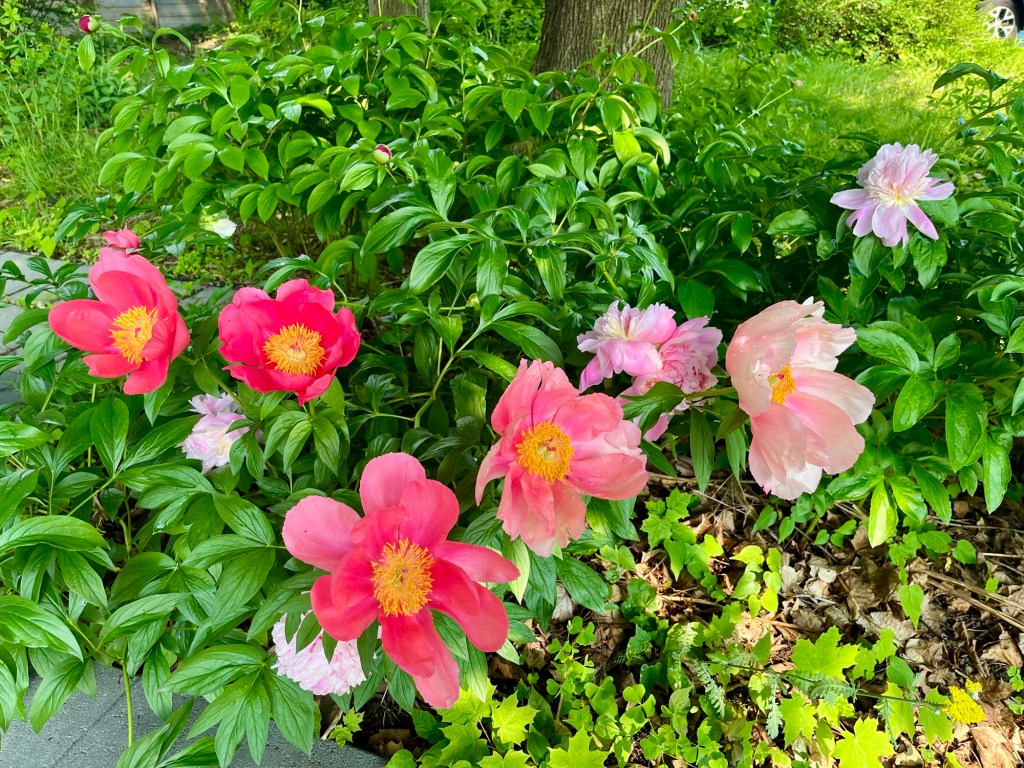
I would not be able to describe the scent of a rose, but when I pass by my neighbours’ house, I know their white roses are in bloom before I see them. My body knows more than my head wants to admit or process. I am trying to listen. Why, at a time when I should feel content, when everything is going my way, do I feel so discouraged and withdrawn? Where does this overwhelming need to protect myself coming from? And what do I do with it? One thing is clear: I am looking for an open door somewhere, away from my work and away from my marriage. Where will I find it? And when I do, how will I recognize it and trust enough to go through?
-
June 11
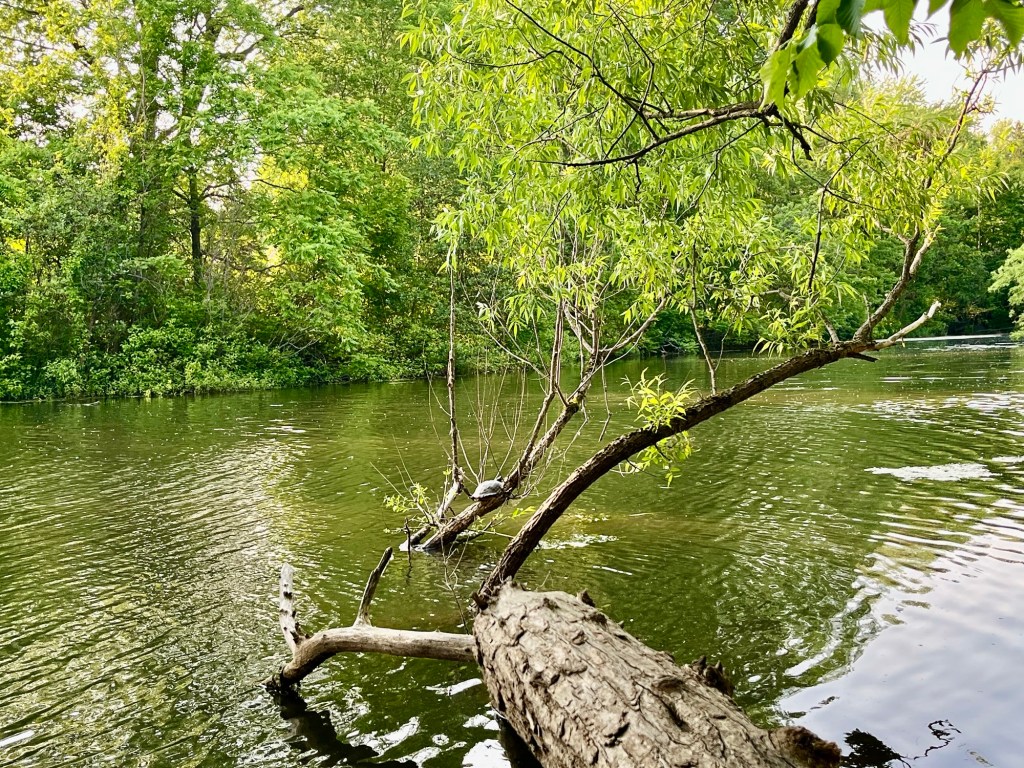
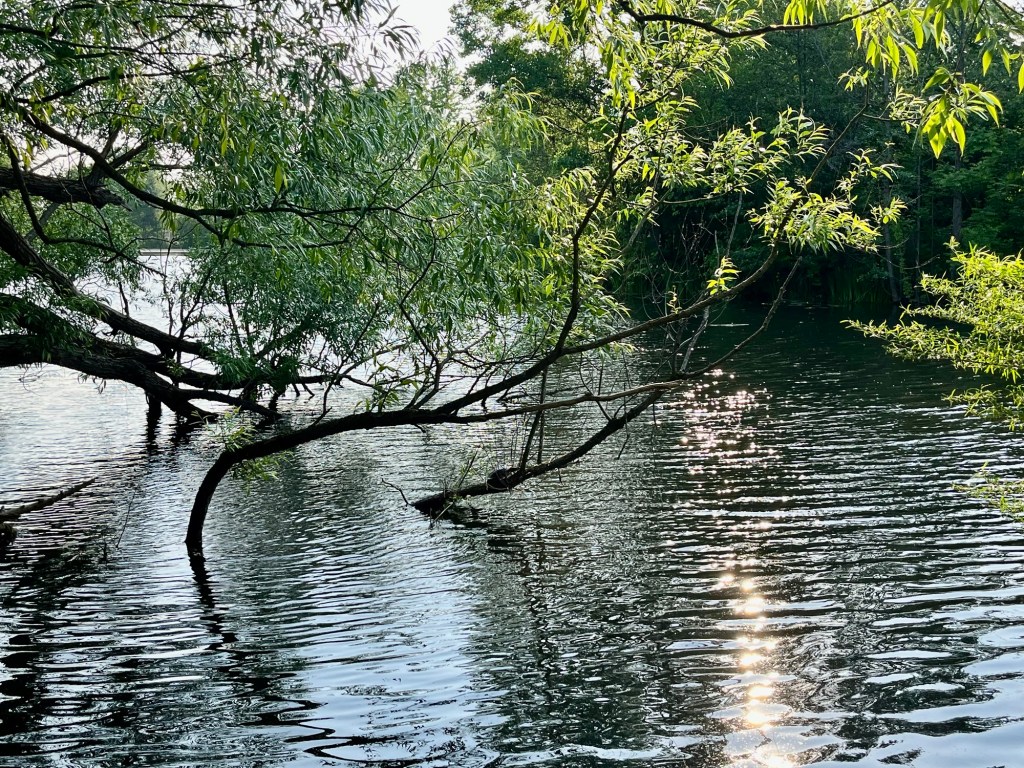
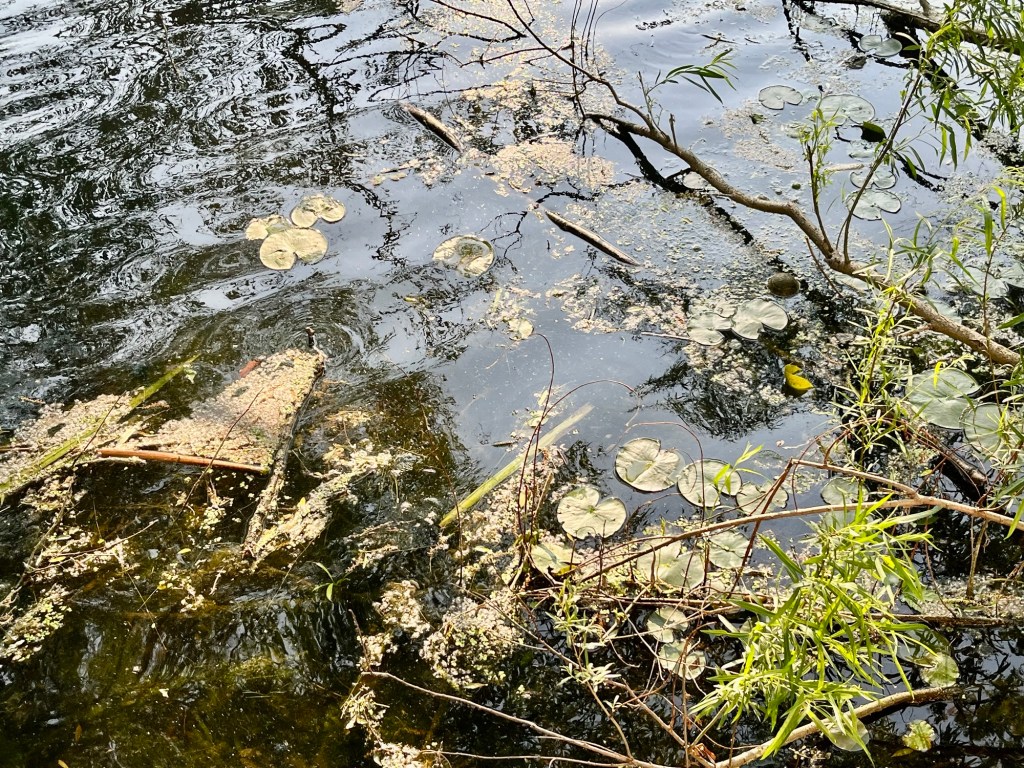
On days like this, being outside, somewhere lost in green, somewhere in the sunset, somewhere by the water, somewhere where black dragonflies are preying on mosquitoes, is the only medicine.
I saw a turtle perched on a low branch above the water and came as close as I could to observe. I thought I saw her turn her head, again and again, with obvious curiosity and eager engagement. I was surprised at this, then surprised at my own surprise, at somehow expecting the turtle’s movement to be slow and lazy. Why would I deny an animate being her right to be animated?
A redstart was tuuuit-tuuuiting somewhere above mine and the turtle’s heads. I wondered if the turtle heard him. What does turtle hear? What does she see? How does the world she sees look to her? What does she know? What does she feel? How does it feel to be someone other than human? Does it ever feel lonely?
If a turtle asked me what it feels like to be human, this is what I’d say. It feels lonely. This fundamental loneliness that only one creature in the universe can feel, the only one who managed to separate herself from the rest of the creation so completely. It’s on days like this, when summer is still new and mild, when peonies are in bloom, when evenings are endless, when everything is well, that I feel my loneliness so completely that it makes me cry. It’s on days like this that I ask myself whether, given a choice, I’d choose to be human.
-
June 10

I slept badly last night and spent the day battling my anxiety. But tonight, long after I’d put my children to bed, long after I should have gone to bed myself, as I am looking outside at the full moon and at the orange flicker of a burning stove in the dark of my neighbours’ backyard, I realize that I am no longer scared of the night, no longer scared of loneliness, no longer afraid of anything.
-
June 6
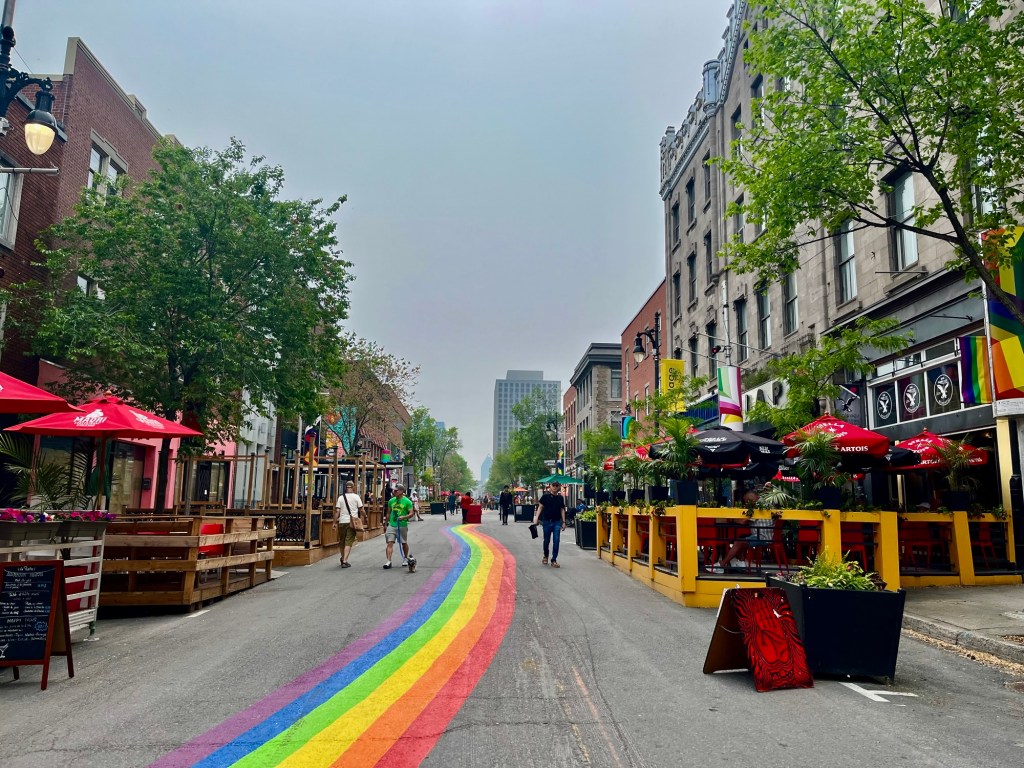
The first sound I hear waking up is the insistent cries of baby robins asking for food. At least, this is what I think is happening. Those robin babies are very loud and I think that the nest must be somewhere right outside my bedroom window.
The dawn looks gray. I think it’s fog, until I realize it’s not. Later I learn that the wind’s been blowing from the West, bringing the smog of wildfires from the Prairies. I am grieving for all those forests and houses and Treaty territories disappearing in the fire.
Things have been disappearing in my community too, little things. Back in spring, when the leaves were still tiny and neon green, they’ve cut an old tree on the street I take when I walk my kids to school. And a week or two ago I noticed that an old house I loved because of its white porch, blue shutters and a wild garden, was eased to the ground. The garden is now a construction site for a larger and more luxurious mansion.
When they were cutting that old tree, I stood in the middle of the street, determined to witness its final moments. Its life was longer than mine and more meaningful in many senses. It was a home, a shelter, it was the guardian of the soil, the keeper of seasons, the provider of oxygen. I wondered, what its fellow trees were feeling, the ones who grew next to it and those on the other side of the road, from where I was watching. Since the trees don’t move around, they must grow very attached to their companions. I touched the bark of one of the trees in a gesture of condolence. Even now, as I walk past the place where the tree used to grow, I feel its absence and I know the other trees feel it too.
Montreal smelled of smoke and worry. The Village smoked of weed, freedom and human misery. The smells mixed in an unpleasant way. I got a small red jasper stone as a gift. The note said it will ground me and help me get out of my head and feel more connected.
Tonight is prom night at the high school across the street. The kids’ cheers are loud, but not nearly as loud as the hungry cries of robin nestlings or the voices of my own children when they want my attention. I hope these kids will be ok,
-
May 24
I can imagine a tired bird
But I can’t
Imagine a bird tired of being a bird.
I think that we are the only ones
Who get tired of being ourselves.
And I can’t understand
Whether this is a fatal flow
Or a super power.
What a strange species we are.
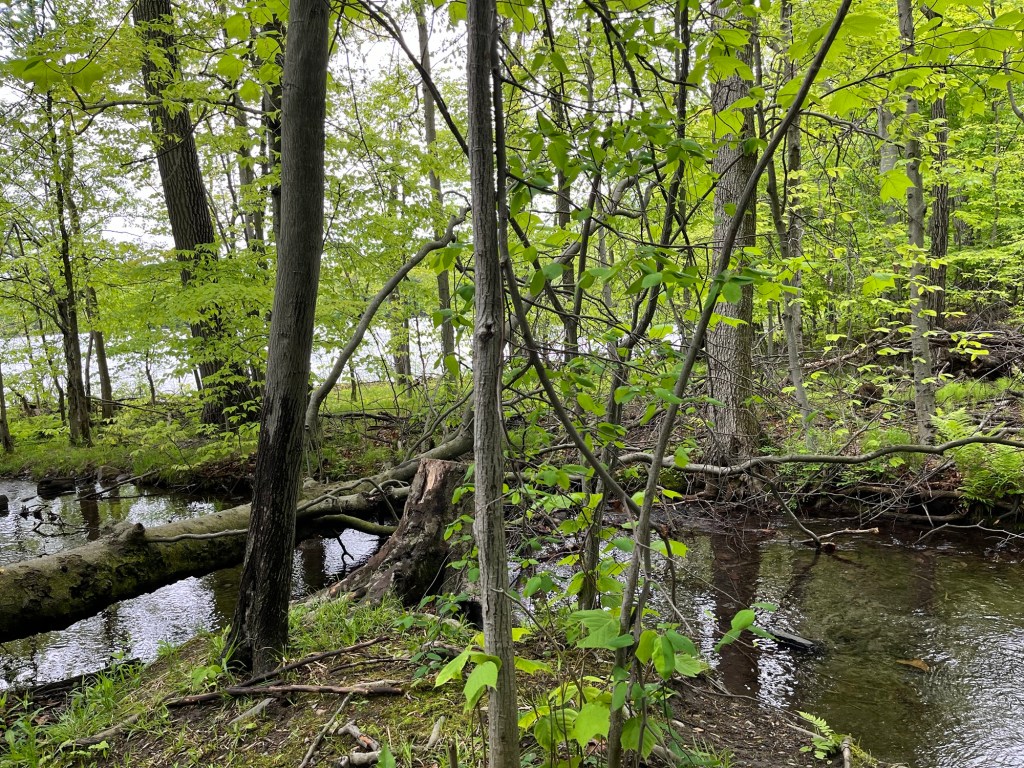
I am writing this by a creek on a Saturday afternoon
Water running so loud it overtakes
The song of the Great Northern Flycatcher
And the chirping of the Least Flycatcher
Going about their lives up in the dense spring foliage.
Isn’t it ironic how desperate I am to catch a glimpse of them
And how indifferent they are
To whatever it is I am doing.
-
Subscribe
Subscribed
Have a WordPress.com account? Log in now.

