-
March 27
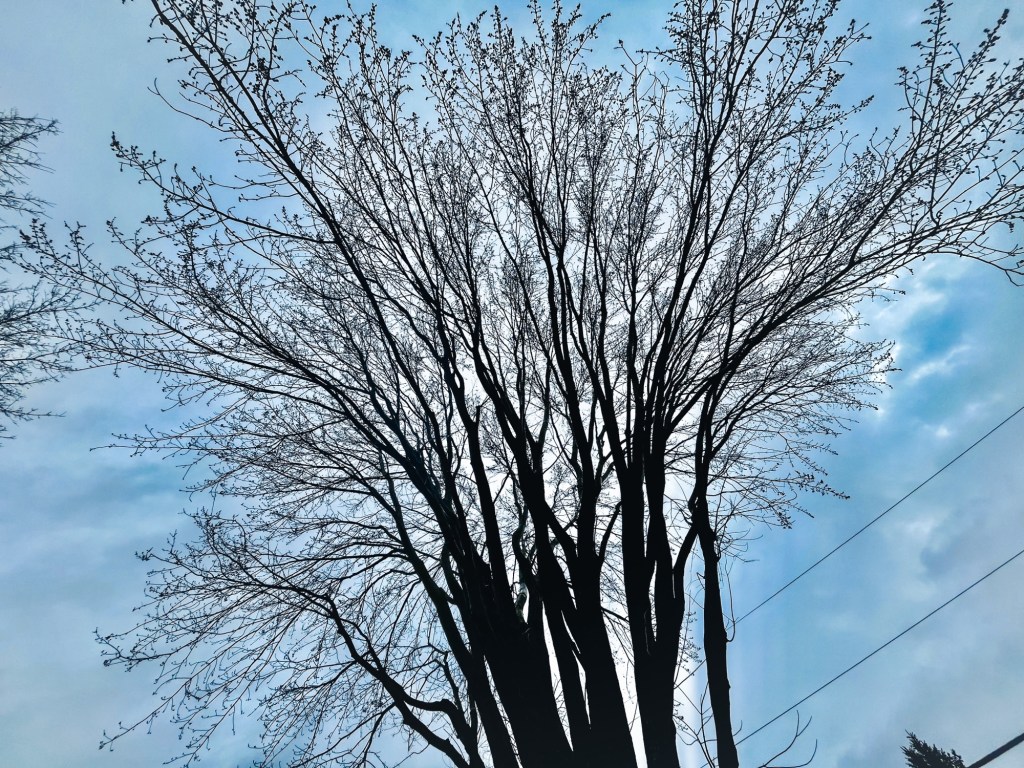
This may very well be my favourite season: the time when living things poke from the ground and swell on branches, the time when days are getting longer, the time when kids arrive home from school and fish outside to play with friends.
This morning, the inevitable happened. The morning itself was wet and mild. I set out for a short walk around the block. Usually, I would do the walk while listening to an audiobook or a podcast, but since I am still reeling from finishing The Comfort of Crows, I decided to listen to what’s going on around. I don’t think that I had ever listened with so much intent, neither have I ever felt so connected to the here and now as during this short walk. I though I had heard about six or seven different bird songs, but was able to see only two plump chikadees and a robin. The rest of the birds remained invisible to me.
When I came back home, I finally downloaded the Merlin app and now I can tell to which bird belongs a song. I feel like I am learning a new language – although I can’t interpret a song without my Merlin app, I am learning to tell them apart and rejoicing in the anticipation of the moment when I will not need to rely on my bird interpreter any more. One day I will walk on my street and say “hello robin” “hello cardinal” “hello goldfinch.” One day I will hear the land I live on and understand its song all by myself. But for now, my greatest pleasure is to stand on a corner of a suburban street, under some big tree and read the names of the birds that appear on my Merlin screen: that was a red-winged blackbird, this is a sparrow, here is a cardinal and a chikadee and here is a bluejay.
-
March 26
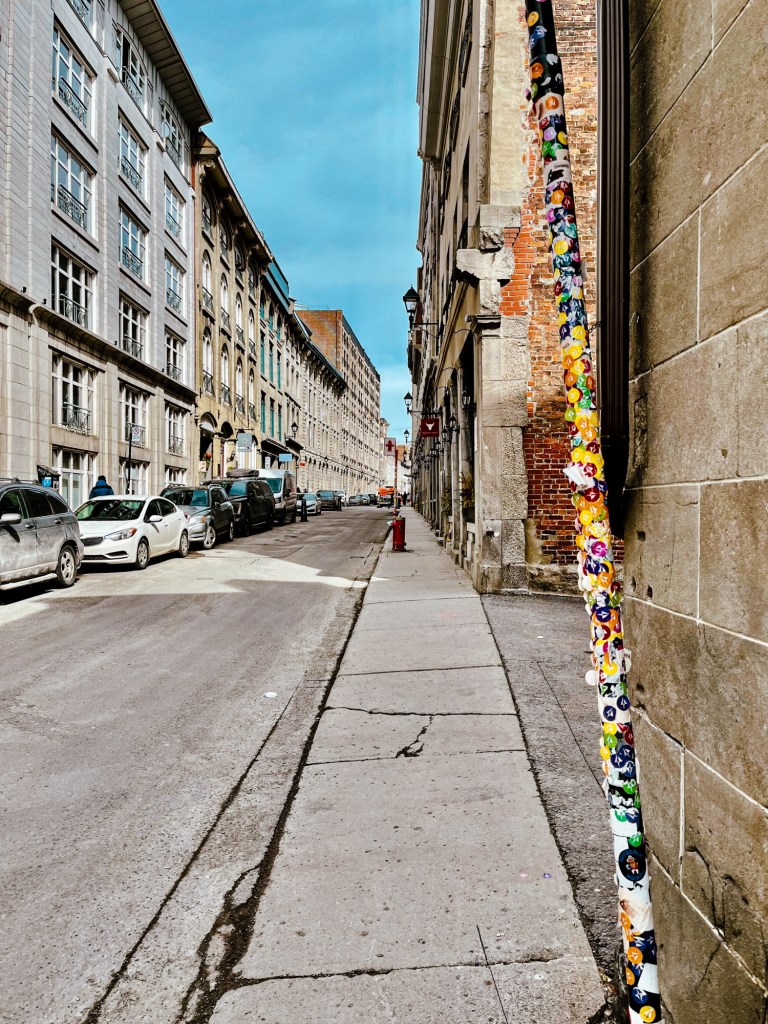
A metal post in the old town covered by layers of coloured stickers from Pointe- à-Calière museum These days feel like walking on a thin ice over a reservoir of grief so vast, it will surely swallow me and everyone else whole. When people ask me how I am doing I answer that I am okay, but everything isn’t. I do so partly not to embarrass them, partly because I am really ok. But what good is being ok in the world that is so deeply lost.
Things I am grieving or worrying about: those damn Zirkon missiles, genocide of Palestinians, the upcoming elections in the US, the end of Western civilisation, the fact that I can’t register for the courses of my choice in the university, always too much work and too little time, Anya coming soon and us not being ready, the loss of biodiversity.
Things I am grateful for: children, good books, good grades on my intercultural leadership class, songbirds, dance lessons on Tuesday night, everyone who writes to me.
I have finished The Comfort of Crows by Margaret Renkl. I listened to it all, with acknowledgements and publisher credits – I so didn’t want it to end. The audiobook ended at the beginning of my lunchtime walk. It made me grieve a little and because I needed consolation, I turned to the Emergence magazine podcast where Jenny Odell spoke about rock formations and deep time and seeing places in their own history, rather than as containers for our history. This was fitting, as it was in Jenny Odell’s book that I first saw the reference to Margaret Renkl’s book.
-
March 25

It is full moon tonight. It was long to rise and I’ve come out twice to look for it, before I noticed it, partly covered by the thick branches of the tall fir in the neighbours front yard. It was pale yellow, shiny and beautiful. I’ve been thinking about the moon all day, trying to tune into my mood and emotions. In the end, it’s probably what made all the difference: it was like a day-long breathing excercise. Be kind, take it slow, walk away from the triggers, take a walk. I am listening to Margaret Renks on my walks and this itself is the best anti-anxiety remedy I could find.
I have noticed the first green sprouts of spring garden flowers peeking through the mulch in the front yard that I remember for its annual spring display of flowers. I have noticed the red buds in clusters on the branches of two old trees. I try to remember which trees, so I can identify them once the leaves are out. I am also obsessing over a bird song I hear every morning and evening, when I go to pick up the kids. Thus, five years since I moved to the town, I am learning the land, its habits and its inhabitants.
I think my grandmother would know the names of the birds and the trees. I am thinking about her today, since it’s the full moon and in the Hadenausaunnee traditions, the moon is our Grandmother. I am thinking of everything my grandmother taught me, although I was too young and careless to learn. I am learning it now through my memories. My grandmother taught me singing. Since I am lacking talent to actually sing, she taught me to perform and have confidence. When we went to her dacha (a tiny plot of land on the outskirts of the city with a ramshackle one-room cabin and a toilet outside) she would gather all our neighbours and ask me to perform. I could sing (very out of tune), declare poetry or act – everything went with the appreciative neighbours crowd.
My grandmother taught me to love tulips and peonies and everything that grows in every season. Her garden was full of flowers, despite the shade from the trees. My grandmother was able to grow almost any fruit, vegetable, berry or flower.
My grandmother loved birds and cats, although these two loves seem incompatible. Kyiv has pigeons and stray cats in abundance. Every day, my grandmother would lay out a feast for both species: grain and soaked bread for pigeons on the windowsills, food scraps for cats under the window. She had special containers to keep those food scraps.
My grandmother taught me waiting. I would come to visit her from time to time, mostly out of obligation, because at that age I didn’t appreciate the privilege of being able to speak to my grandmother, who survived a genocide and lived through a world war and still remained simple and kind, never complaining. She always waited for me. When my father had his accident, we didn’t tell his parents. The grandfather was still alive, but he had a weak heart after four infarctus, so we preferred to lie. Now I understand that it caused them pain, not knowing why their youngest son disappeared so suddenly, why he called so rarely (back then my dad didn’t even have enough money for regular calls), why he never came back. My grandmother waited for him until the end. In the end, after grandfather died and my grandmother succumbed to dementia, she started waiting for her husband. She would say: “Misha will come back from the market in a minute.”
And spring, she always waited for spring, always. I don’t know for sure, but I think that spring was her favourite time of year. When she spoke about death, she used to say that she didn’t want to die in winter, she would wait for spring. To my shame, I do not remember the exact date of my grandmother’s death. But I think it was in spring. I remember getting the news from my mom and crying and saying “at least she made it to spring.”
I don’t know if I believe in heaven and hell anymore, but I do believe in joining my ancestors one day and I am looking forward to seeing my grandmother and meeting my other grandmother who died before I was born. I am looking forward to finally knowing and understanding who I am and where I come from.
-
March 24
The surprise Saturday snow has melted faster than we expected, so, by the time we got to the sledding hill near the school it was mostly grass and dirt with some wet sticky snow in shady places. The kids still had fun.
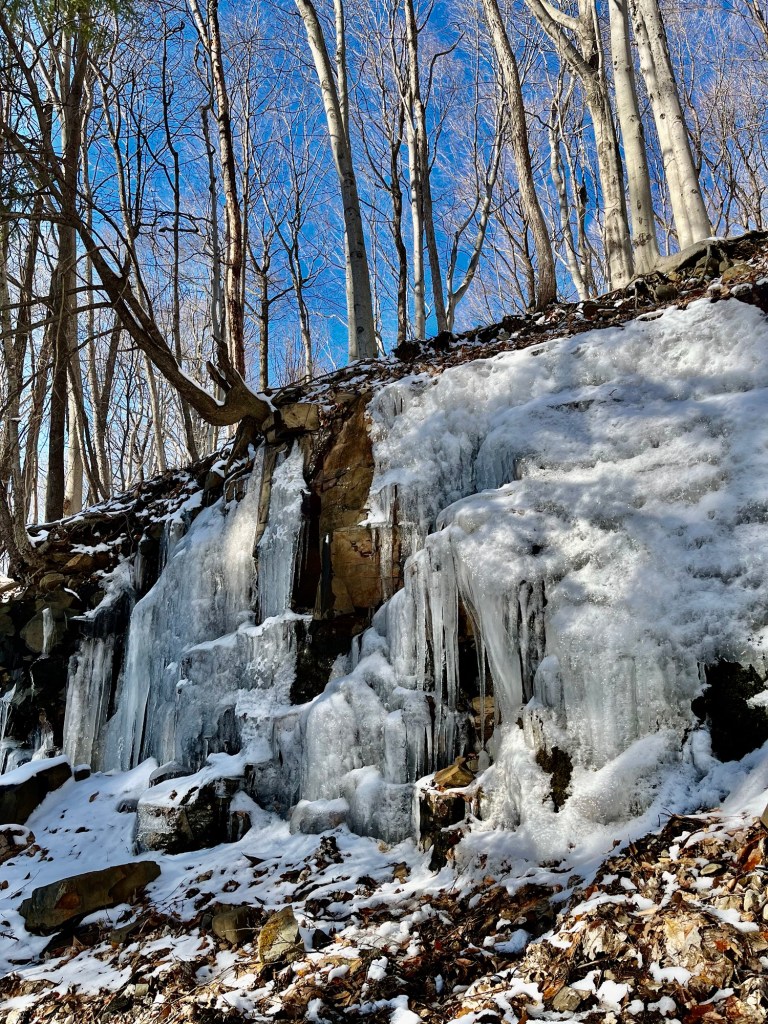
The kids asked for video games and I said yes easily, because I was desperate to get out of the house while it was still sunny outside. The two Sunday traditions I love most are morning crêpes and afternoon walk around the national park. I’ve been in the park hundreds of times and it’s not even this big, but still it manages to surprise me. It’s surprises are come in all shapes and sizes: colourful mushrooms (so far, I have managed to identify about two or three dozen species), garter snakes, a concert of bullfrogs in the early summer, rare flowers in spring, a symphony of colours in the fall. Today, as I was walking downhill towards the exit of the park, I was arrested by the view of a tiny frozen waterfall. It looked like a little sanctuary.
I am thinking a lot now about natural processes and deep time, about the fact that almost all living species are older than us, better adapted and more attuned to their environment. About the fact that nature has it’s own history – it is cyclical, always old, always new. About the fact that at that very time the sun is warming the bark of the trees and the roots start releasing the sap that runs up the trunk of a tree, waking up its cells that will soon produce the wonder of fresh leaves. Although invisible, spring is already happening.
I used to go to church on Sunday. I knew so many churches over the years. Of all of them, my favourite was the Orthodox church, where I could experience the mysteries, things bigger than me without even trying to understand them. Unlike protestant churches of my youth, the Orthodox rite did not require my active participation – just being there was enough. Now I go to the forest on Sunday and it feels similar to what I used experience in church. I go to the forest, because it is bigger than me, because I can tap into an ancient, benevolent power, because I feel accepted, because I don’t feel lonely there, because I can rest. I go to the forest like I used to go to the church, but with more lightness in my step. I go there to worship.
-
March 23
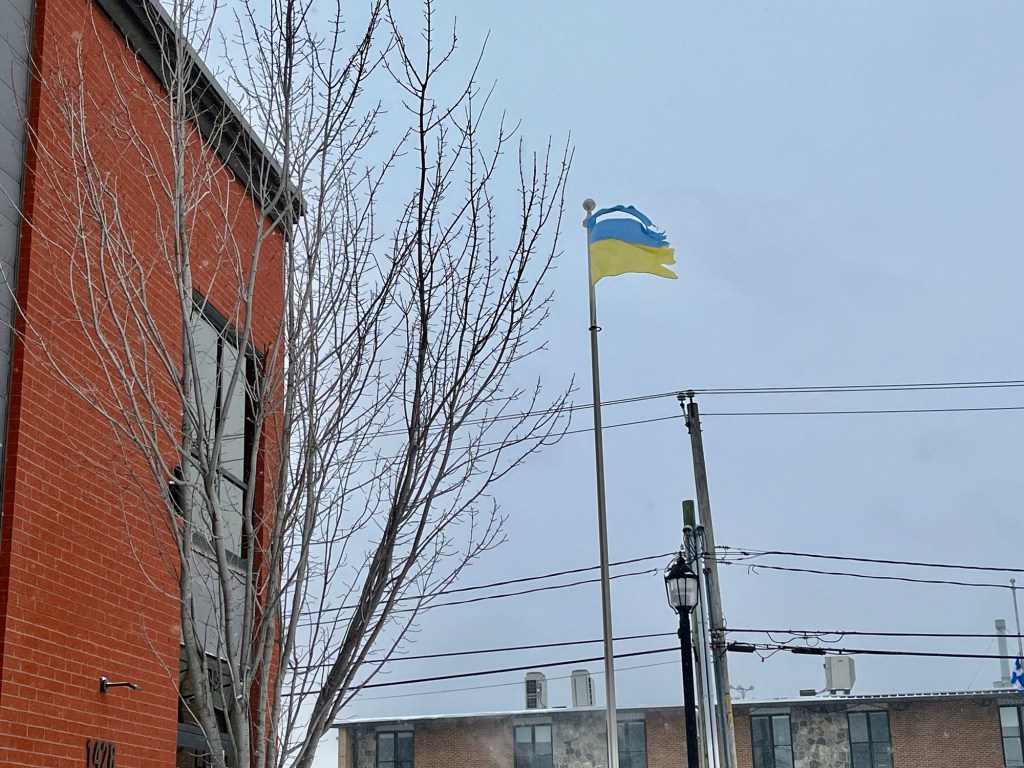
This flag had been flying next to our federal MP’s office since February 2022. I may disagree with him on thousand different things, but I am deeply grateful that he keeps the flag up for over two years now. I am also grateful that he doesn’t change it for a new flag. I hope it stays up until the war is over, until the victory.
I’ve been reading numbers on the news: numbers of drones, numbers of missiles, numbers of destroyed homes, numbers of people killed in a concert hall by, I believe, their own government. I have seen other people writing the same thing. The two number that stuck with me: the number of electoral fraud in this year’s russian election is believed to be between 22 and 40 million votes; there have been over 39 000 air raid alerts in Ukraine since the beginning of the full-scale invasion. I am trying to understand this number. I am dividing 39 000 by 800 days, the results comes up to almost 50, then I am dividing it by 24 hours and get over two an hour. I know this math does not reflect how things happen in reality, but still – try to imagine that for over two years twice an hour your life, your sleep, your daily activities, your laughter, conversations with friends, reading bed time stories to your kids, making love, walking your dog in the park, is punctuated by wailing, howling siren announcing that someone is trying to kill you. Imagine living in this reality, raising kids, making babies, writing poetry, volunteering, pouring lattes, doing yoga, shopping. Imagine being scared. Imagine not being scared. Imagine getting used to being scared, so that even fear becomes familiar and routine and only hope and rage remain searing. One never get used to hope.
I know that if I wrote this on social media, someone would reply, or think “but what about…” Compassion has become a zero-sum game. So, I no longer say anything on social media. I am scared and I am losing hope.
Tonight, my youngest was too tired to settle down. He refused to go to bed or accept any help. Instead, he sat in his bed and cried with a force of desperation of an overwrought five-year old. I sat in his bed next to him. When he finally finished crying, he settled down on his pillow and I stroke his cheek until he fell asleep. I wish someone was sitting on a bed next to me, because I feel very tired and scared and guilty. I am sorry that I can’t protect you. I am sorry you have to spend the nights, sometimes entire nights in the bathroom or in the corridor, hoping that this time the building will not collapse on you. I am sorry you have to walk your elderly parents down to the bomb shelter, finding way with the flashlight of your phone, because there is no electricity and the elevators don’t work. I am sorry you have to build shelters in the schools. Does my old school have a shelter? I am sorry I don’t know all that. Not in the way you know. I am sorry, so so sorry.
-
March 22
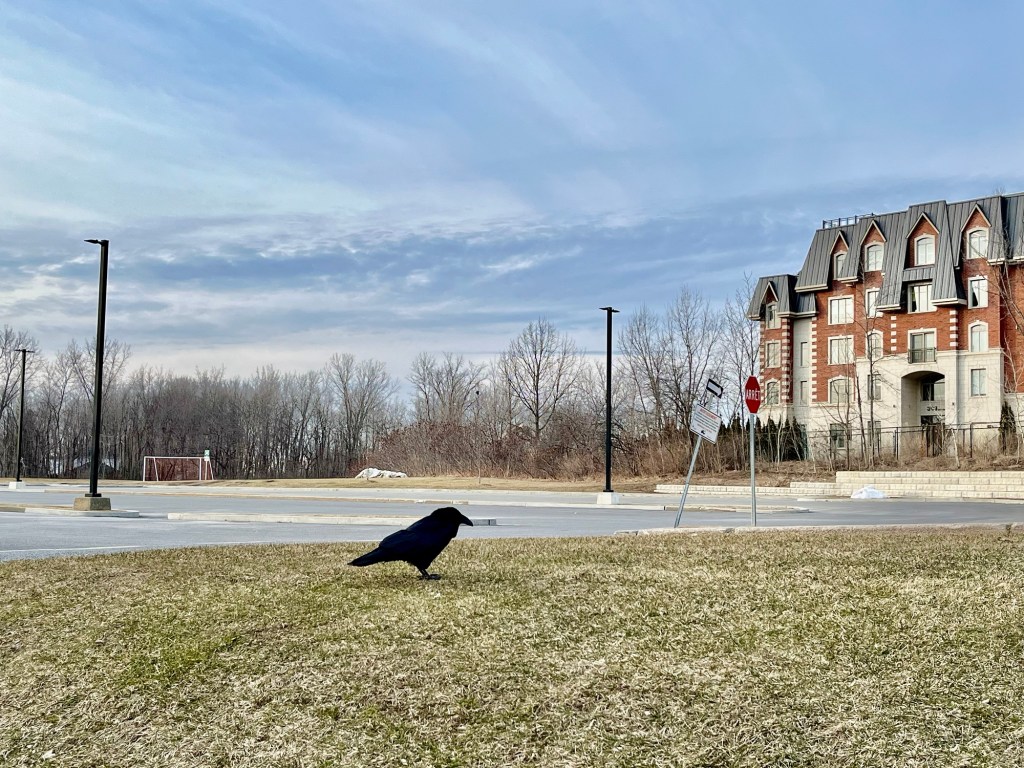
I saw this raven on the parking lot of the secondary school today. It’s big, very black, beautiful and nonchalant. I wish I knew how to approach him.
The news today are overwhelming. Ukraine is under the biggest attack since 2022 for the second day in the row. There’s been a mass shooting in Moscow – I have a hard time sympathising, but neither do I gloat. I’m just wondering if it will spiral into a new level of violence. And those are not even top news. The top news are that Kate, the future queen of England, has cancer. No one’s talking about Ukraine, just one person said something about Moscow, a few mentioned Kate. The story of one sick woman, a mother, seems to be easier to relate to these days. I can understand that. There are too many people dying, too many things falling apart. I don’t believe people are heartless. They are just small, confused and scared that they too will fall apart.
-
March 21
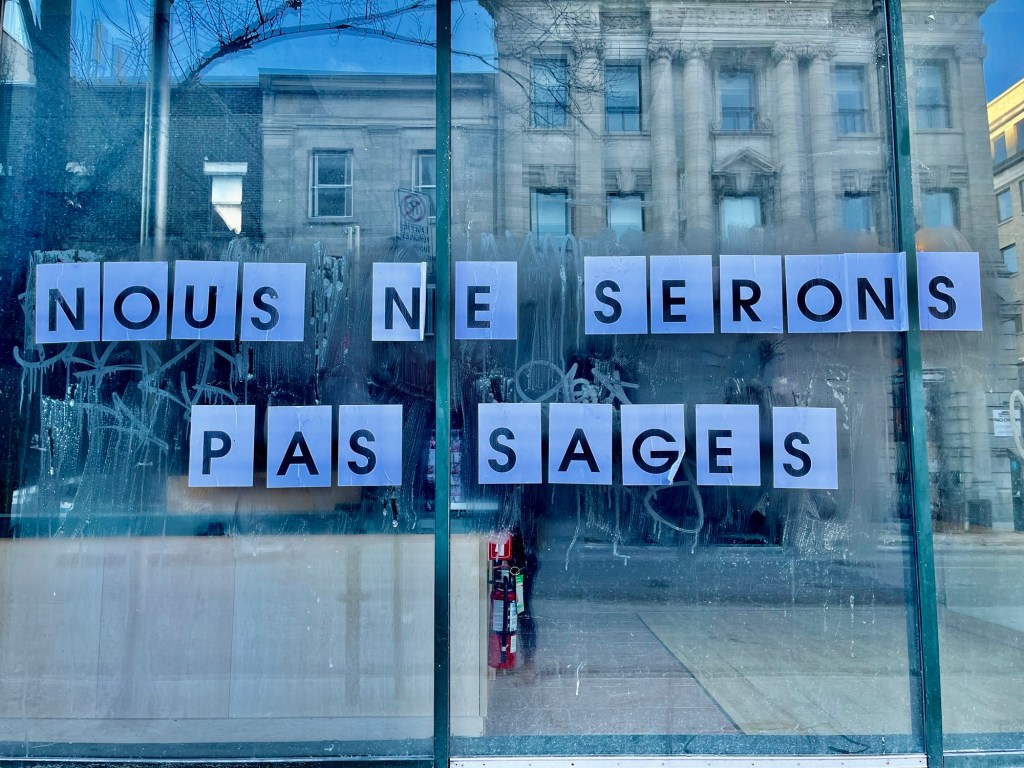
The north wind was blowing all day today – the only kind of weather I truly hate. But it was a good day, the one that felt full and restful at the same time. It was full of small luxuries: good coffee, time to write and reflect, time to talk to friends without hurry, more coffee, more time. In the evening I texted with Vika about the volunteer translation project she got me involved in. She texted back, saying that there is an air raid and they are in the shelter. This is the kind of truth I have to hold at any given time: it was a good day here in Montreal, back home my best school friend was hiding in a shelter during an air raid.
-
March 20
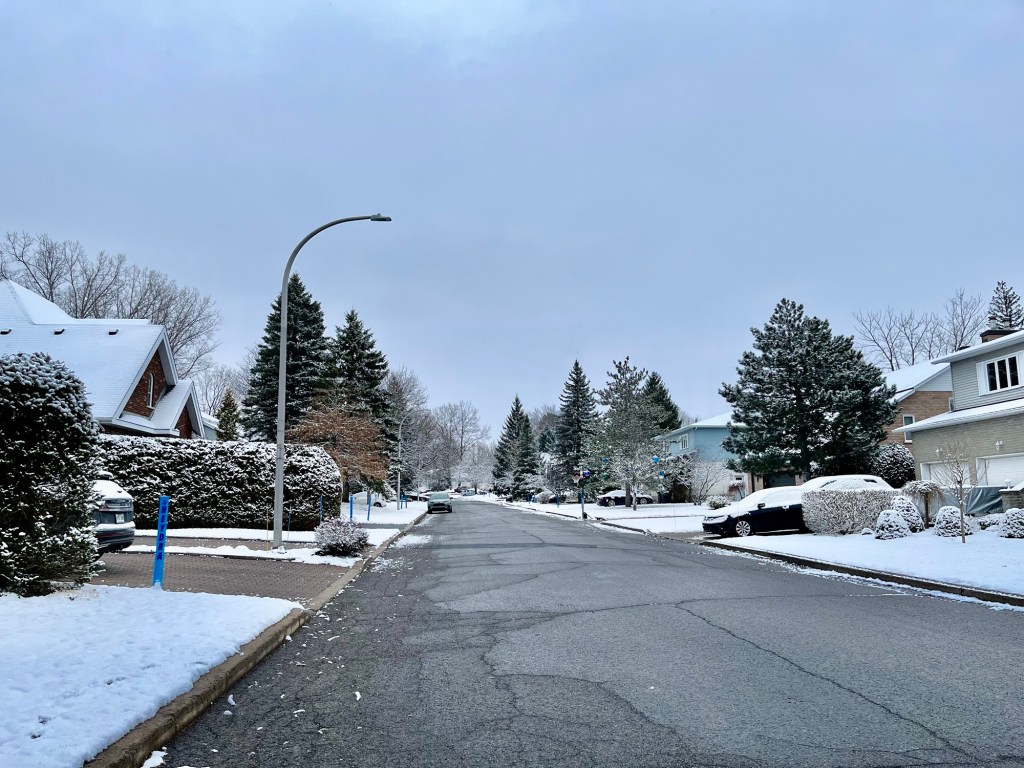
The first day of spring. The snow fell in the night and covered the ground to make it look like winter. It was honestly by noon.
Early in the morning, before my alarm clock, before the first light, I heard the first word: mama? Mmh, I replied. Je t’aime, he said. I spent the day believing this simple truth, that I am deeply loved.
-
March 19

It’s Spring Equinox, a moment of fragile balance. There was half of the moon in the sky today. An icy wind was blowing all days long. As the night fell, it brought new snow. This feels important.
It’s Tuesday, so I had to wake up early and drag myself out of bed before the first light. Still, I took a minute to ask my ancestors to give me guidance. It feels easier to believe these things in the moments between sleep and wakefulness. It felt like they listened.
-
March 18
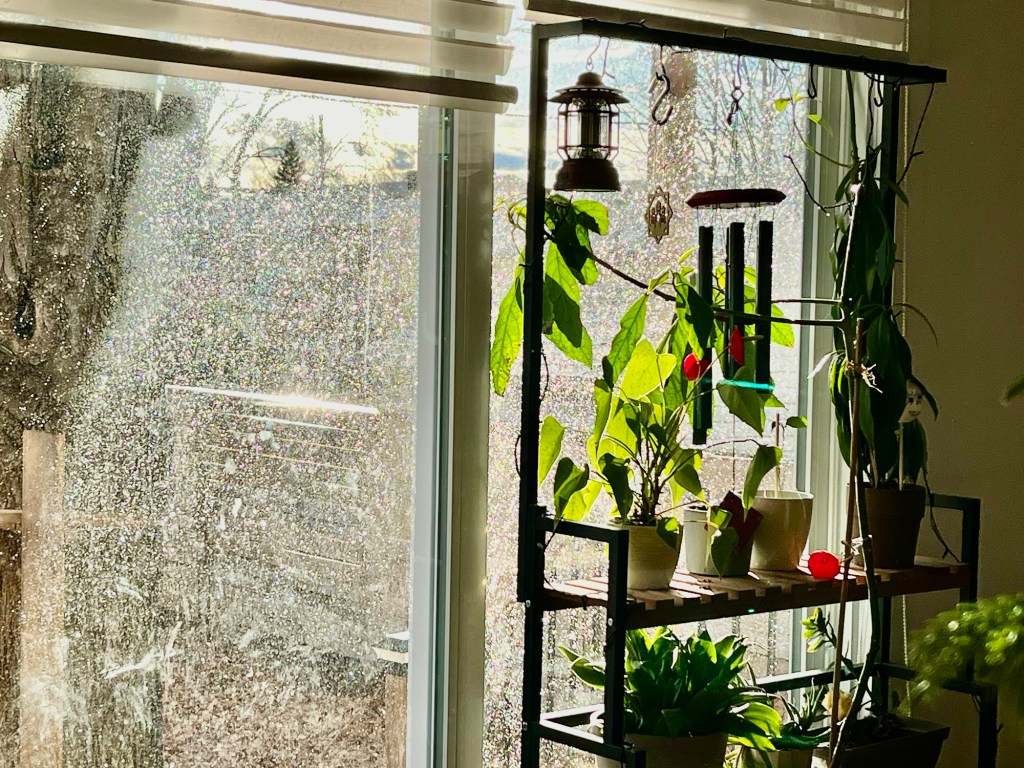
Monday, I feel wiped out and ready to sleep by 6pm.
I used to look forward to mondays. I used to anticipate the thrill of returning to my work, of doing my work and doing it well. I remember it like from a different live, a different me.
I still love my work, but only those parts of it where I can be myself, where I feel safe to show my messy, creative, uncompromising humanity. I no longer feel safe most of the time.
I have to remind myself not to display any negative emotions. Any strong emotions, for that matter. Don’t show doubt, don’t show reluctance, don’t show disagreement, don’t show disappointment, don’t show that you’re exhausted and lonely. Don’t ever say again that you don’t feel like you belong. It’s better to hide something than say it and be misunderstood.
Because I don’t know how to hide my emotions selectively, I hide all of them. Joy, enthusiasm, burst of wild creativity, wonder, joy. Of all these, I miss joy so much. I have to remind myself to nod in agreement and smile. I don’t know if I am fooling anyone. Certainly, not myself.
The good thing about this, the really really really good thing is that I no longer see Monday as a return to reality. I am faking it for seven hours five days a week (I still produce a very good work, I just don’t love what I produce anymore). Beyond those seven hours, there is reality. There are my children, my dormant garden, my forest alive with mushrooms and mosses, my books, my friends, the voice of Margaret Renkl in my headphones.
I wish I could merge the two worlds. I wish I could brighten the grey canvas of my office with the ideas of Adrienne marée brown, Bayo Akomolafe, Blair Stonechild. I wish I could bring the intellectual awe, wonder and courage into my corporate seven hours, but I tried and I failed and I don’t believe anymore that I will succeed one day or that it’s worth trying.
So, I have a choice: I can either let the corporate seven hours extinguish my joy and my wildness, or I can protect it behind a wall, an armour or a mask. This is a hard choice, believe it or not. In my whole life, the only thing I’ve never been good at (besides singing and some sports) is being fake. But I will learn. I am a very good learner.
-
Subscribe
Subscribed
Have a WordPress.com account? Log in now.

