-
January 7
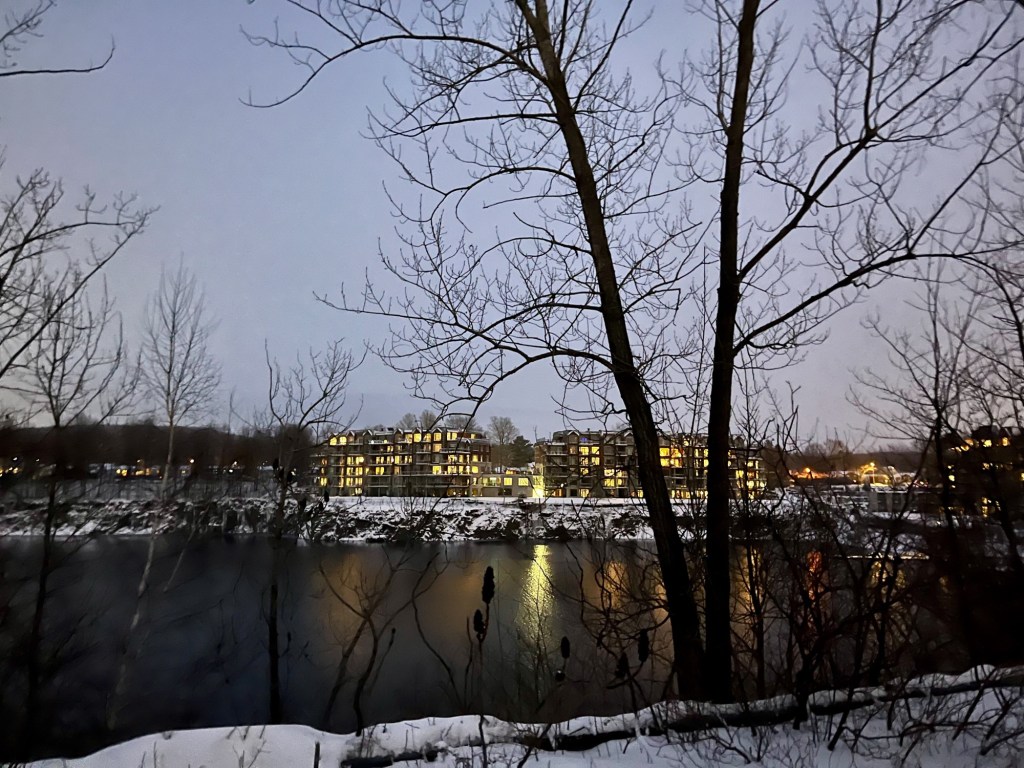
Fresh snow makes everything better. Brighter, lighter, whiter, more bearable. Today, I am grateful for fresh snow like never before. Today, I am grateful for a walk in dimming twilight, for the freshness of crisp air. Today, I was grateful for the privilege to turn off news and social media. To live, for a day, without war.
In the evening, I opened my Facebook feed and learned that the poet Maxim Kryvtsov perished in battle. He was 33. Judging from the photos, he had green eyes and almost unbearably handsome face. I didn’t know who Maxim was, had no idea that his poetry book was voted one of the best Ukrainian books of 2023. I had no idea he lived and now he’s dead and I feel the pain together with many people who loved him and whom I love. I didn’t know his name, but I knew his poetry – it appeared on my Facebook feed from time to time, reposted by friends. His poem about Bucha massacre, God, I must have read it a dozen times and cried every time I read it. Until tonight, I didn’t know who wrote the poem that made me cry. Now the people this poem was written about are gone and now the beautiful man who wrote about them is gone too. And with everyone gone, who will remain?
-
January 6
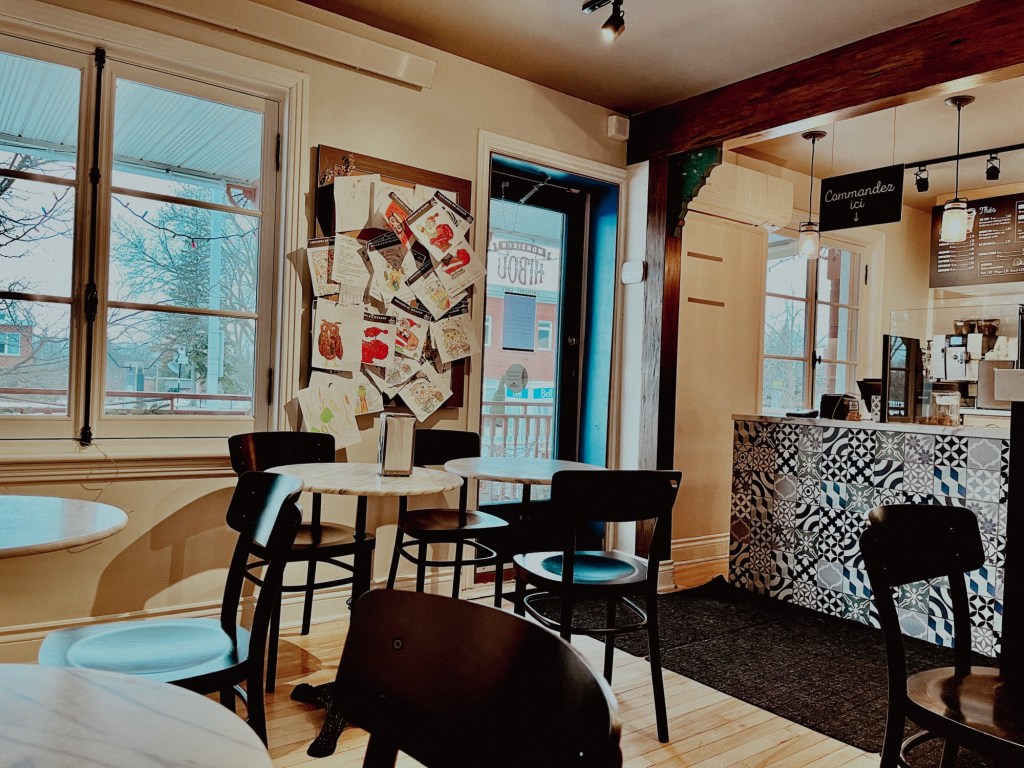
Today my body asked for rest, so I tried to listen.
It is a quiet day. According to the old calendar, today is Svyat Vechir – Orthodox Christmas Eve. Ukrainians no longer celebrate Christmas in January, but it’s good to remember. Maybe, the day still has some old magic.
I love noticing small things in which my children resemble me. Today, I have noticed my son following the beat of the music during his skating class. The skating rink soundtrack is wholly unremarkable, it is there for background only, but my son was nodding and shimmying while trying to keep steady on his skates. It made me smile and feel that particular tenderness one feels when one sees oneself reproduced in a tiny human being. He notices the soundtrack the way I do and one he does I just can tell it makes everything better and lighter. I wonder if he, when he becomes older, would prefer, like me, the serendipity of an accidental song overheard in a café or on a radio to a carefully curated unsurprising playlist. If he will keep his sound down and his earphones off for a chance to overhear something and get inspired. I hope he does.
It looks like it’s finally really properly snowing. Nine times out of ten the snow starts after dark, as if it wants to take its time to prepare a proper surprise. Or maybe, it just likes to have a few hours to lay quietly, in perfectly even layer, before the dog paws, human feet and car tires mess up the perfection. Maybe, tomorrow the snow will be think enough to sled.
-
January 5
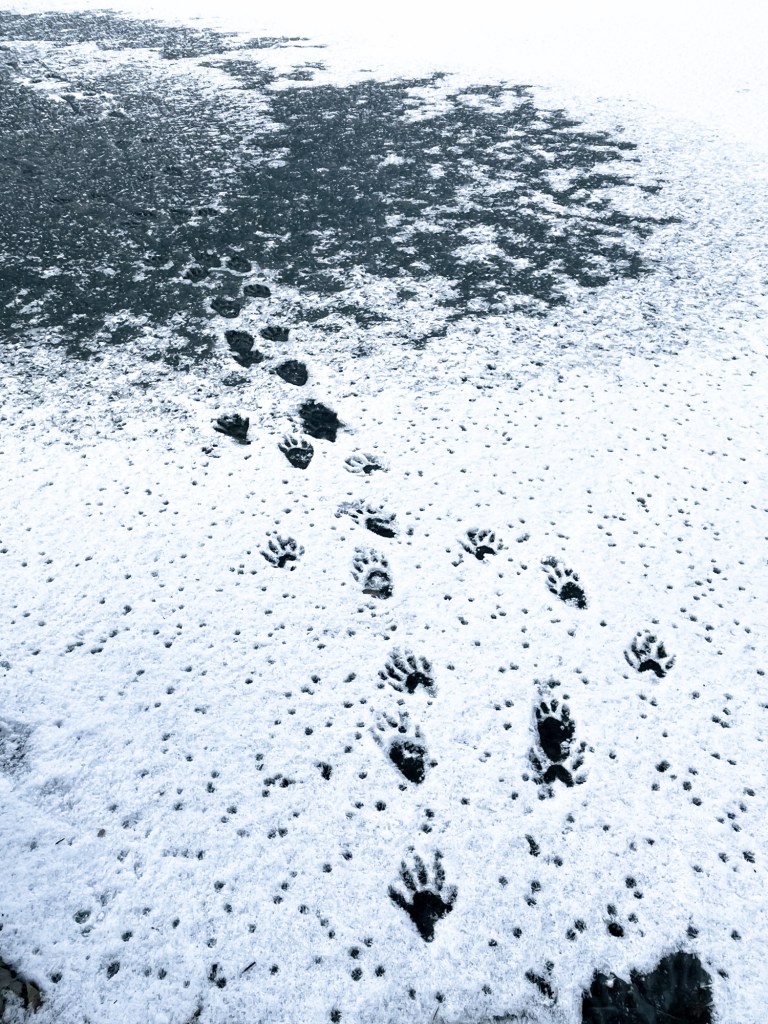
Today, we didn’t change from our pyjamas even when we went for a walk. Just piled the snow suits and jackets and layers of soft cotton and wool on top of the flannel and went outside to check if the little brook in the city park froze over. There were very few people walking. I doubt that the return of the cold scared them, so it must be the return to work that kept them inside. The winter pause is one of those times when I feel acute, tender anticipation of an end, like on vacation and in the last days of August and almost every day in October and even in Spring, when each flower’s season lasts for only a short while. It is always too short, always passes too quickly, always leaves too many memories, even when these memories are only of lazy days and long evenings and mornings when one doesn’t have to rush anywhere. I will never (I hope) understand settler American obsession with DOING something with every free minute. What did you do on weekend? What did you do on a break? This question used to make me anxious. Now I simply reply NOTHING. The point is precisely to do nothing, or not do anything. To stop, slow down, cease, lay back.
So, just for myself, let me list the list of nothings I did today:
fed my children breakfast
made myself a coffee and spent about 45 minutes sipping it and reading Jenny Odell’s Saving Time (finished Chapter 2)
played Dobble and Snakes and Ladders with kids (lost both)
made grilled cheese sandwiches and coleslaw for lunch
went for a walk with Elise (Julien refused and stayed at home) talked about climate change and whether people should have kids at all – I wonder if I am raising an activist or a nihilist and where is the line
came back home to discover Julien asleep on the couch
made hot chocolate for Elise and played chess with her (didn’t exactly loose, but would have lost anyway)
spoke to my mom on FaceTime
did a 5k on a treadmill while kids watched a cartoon
read some more of Moon of the Crusted Snow (it doesn’t get better and I wonder whether I should keep on, skim the rest of the book or abandon it altogether)
hit up dinner and then read to the kids before putting them to bed
also, checked my LinkedIn quite a few times – a gesture that becomes more and more meaningless and annoying.
Overall, well done.
-
January 4
I can’t imagine ever working during the two weeks of Christmas school break ever again. And, to be honest, I don’t feel remotely ready to go back to dusty office carpets and mandatory small talk in three days. I love this pause for many reasons.
Not rushing my children in the morning and giving them freedom to decide their daily activities. Not caring if we do nothing, if the day is not productive or “successful.” I have discovered, to my astonishment, that one can only “waste” time if one approaches it from an extractive perspective. The concept of waste can only exist in opposition to the concept of value. One cannot waste time by breathing, thinking, daydreaming or playing. It is called existence.
Not caring how I look. I have had body image issues for as long as I remember myself. I have a clear memory of my mother’s friend giving me my first diet and exercise plan at the age of seven, but I suspect that people had told me that my body was “wrong” even before that age. Because of the way I’d been taught to hate my body, dressing and styling myself to the point where I remotely like the way I look takes a great amount of energy.
Not caring what people think of me, not caring IF people think of me (most of them don’t and it’s alright). Freeing myself from virtue signaling and the urge to prove that I am right, and getting rid of most social media apps. It’s an uphill battle.
Not spending my daylight hours in front of my computer screen.
-
January 3

This morning I felt gloomy and restless, so I swapped my usual coffee-and-book routine for a walk in the forest. It is only a fifteen minute walk from my home to the forest. In the summer, I go there almost every evening, at least for a quick visit while the sun is setting and my kids are using up their daily screen quota on some silly Netflix show. I should probably be a better mother and get them to walk with me, but the truth is, I quite like walking alone and my children are not eager participants of aimless rambles, so in a way it’s a win-win, even if only in short term. In the winter though the days are short and I rarely have one of two hours of daylight to do as I please. So, today was a gift.
Every time I go to the forest, I remind myself that I should change my approach to wellness and mental health. I should schedule work around wellness and mental health, not the other way around. This time I told myself that I would try to plan one mental health day every two months, choose them well in advance and stick to them no matter what. I think I had a similar idea last March, during another walk in the forest. I ended up working in a crazy rush through spring and then from September to December. I ended up sacrificing myself, not just my wellness days, but my sanity and emotional balance for the work I love. This is the pattern I keep repeating over and over. In my twenties, I used to come to the office on the weekends, stay until midnight, take overnight trains to location visits and survive on a mix of RedBull and Ibuprofen. I was ambitious, driven and most of all I was taught that I, an Eastern European woman, had to work ten times harder to compete against mediocre expats from Western Europe and North America. It took me a long while to realize that I never had a chance in that competition, but the pattern of trying harder, doing more, running myself to the ground just to prove that I am good remained.
This year, although I usually hate new year’s resolutions, I will schedule my life around walks in the forest.
-
January 2
This year was born tired. Even in naive, privileged Canada, the air seems heavy with expectation of the worst. In Ukraine, 200 russian missiles struck overnight, mainly residential areas. I no longer rush to check whether one of these residential areas used to be my home. It is terrifying that Ukraine doesn’t seem like the place that has it the worst anymore.
I am wondering if I am right in trying to protect my children from the news. Should I tell them the truth? Or rather, what truth should I tell them? Whose truth? I tell them I love them. This much I can say for sure.
I have started reading Moon of the Crusted Snow advertised as an Indigenous post-apocalyptic novel – both adjectives appealed to me equally. So far I don’t like it, the writing style is rather dull and characters seem to have been written by an AI, but I am only on the second chapter and trying to give it time.
I had never liked journaling and never made an honest attempt at it, until now. I used to love blogging and was quite successful at it. I love blogging because it is about epiphany, seeing the divine through the lens of every day experiences. This is exactly my writing style and it reflects my expectations of life. I wake up expecting profound revelations, I open a book with a pen in hand – craving to find a prophetic life, I go for a walk expecting a life-changing encounter. I am dramatic, to put it lightly. If I’d lived in the Old Testament times, I’d be one of those mad folks in the desert. I wonder if I was born this way, or if this love of drama was ingrained in me in my pentecostal youth. Anyways, journaling never was my kind of discipline. It is a good reminder that the prophesies and epiphanies are indeed rare, but life keeps happening.
-
January 1
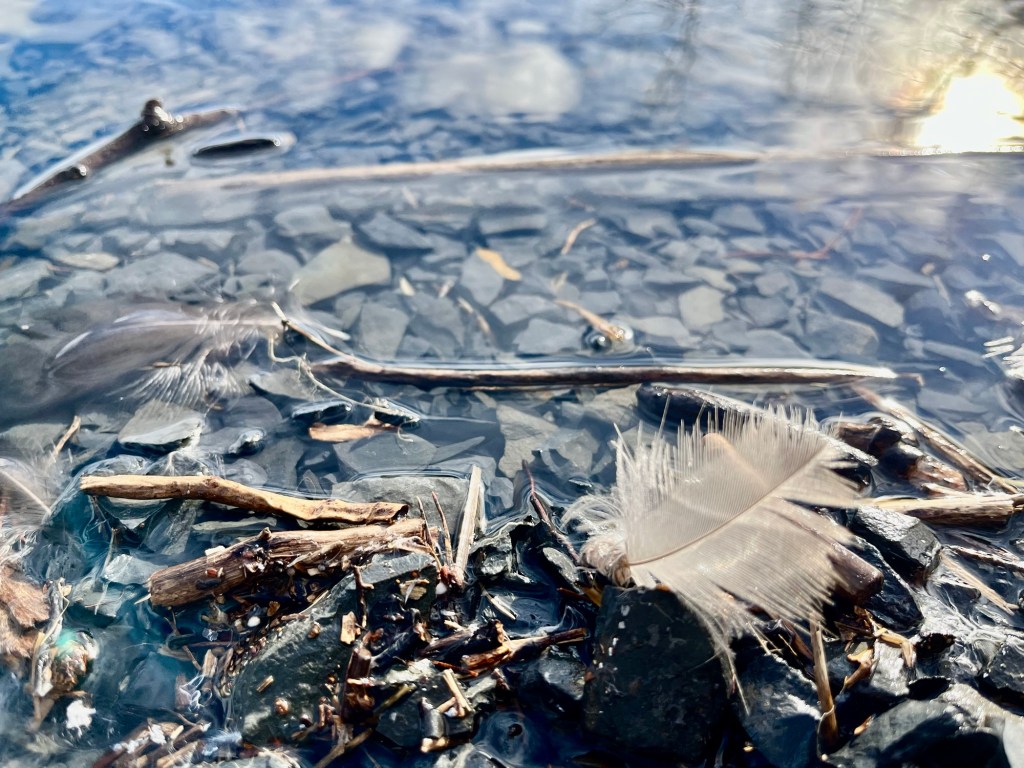
The sun came out for the first time in I-have-no-longer-any-idea-how-many days.
We went for a walk “to say hello to the forest.”
First, we said hello to the trees. Then, we said hello to the geese. It worries me that the geese stayed for winter. How will they survive once the snow finally truly comes and settles? And what about spring? How will we know it’s spring without the long plaintive songs of returning flocks of geese?
At last, we said hello to the forest. It looked naked and shy in this snowless weather.
There were so many people walking. On the way back we passed the construction site, where a few months ago they’d cut trees and destroyed a part of a biking lane to build luxury townhouses. I remember seeing the devastation for the first site, seething with a feeling of loss and helpless rage, calling it to myself terra nullius. Today the construction site was eerily quiet. Are they sleeping, mama? Yes, dear, even capitalism sleeps sometimes.
This is why January 1 is my favourite day. Everything is closed and everyone is walking outside with no other purpose than the walk itself. There are no incoming emails, not even commercial offers. The only day when the capitalism sleeps and I feel myself breathing a little easier.
We came back home, made a hearty meal and played the rest of the day.
-
Echo
And just like this he’s gone. The cat with whom I shared 14 years of my life, with whom I crossed an ocean, with whom I moved from country to country, from one house to the other to the one that finally felt like home. The cat who had a million of little annoying habits, who always wanted something, who was always somewhere nearby, the cat who owned us more than we owned him. Just like this he’s gone and I am mad at him, because he left at such a dreadful moment, he left into a cold October mist, he left when there are no good news to cheer me. He left without giving me a chance to say good-bye, without telling me he’s leaving. He just went outside and never came back. And now I’m looking at the glass door, trying to make out his black shape and white collar in the dark, where there is just emptiness. His name is Echo and he left without a trace after fourteen years and with all the bad things that happened this autumn, this is almost the worst.
-
Space
But the prophecies, they will cease,
The tongues, they will fall silent,
The knowledge, it will pass away,
But these three will remain:
The quiet delight of a long weekend of doing nothing
in the space between the end of Spring and the beginning of Summer,
The wonder of blowing on the white feathery head of a ripe dandelion
and watching its parachutes float and hover in the space between grass and sky,
And the long golden rays of the sun,
setting down somewhere behind the rooftops of the low-rises on Clairevue Boulevard
in the space between day and evening.
But the greatest of these is love.
-
End of Winter
The end of Winter is synonymous with grief. The snow melts and the cracks in the earth and the asphalt shine through its thin layer. I feel constant sadness, the brokenness of the world around me. Not around, I correct myself, as now more than ever I feel adrift in the general brokenness. The cracks shining through the thin layer of snow, of civilization, are identical to the ones in my heart. The end of Winter feels like a church with perfect acoustics: every personal pain and longing is mirrored and amplified through the millions pain points scattered across the universe. I am just one of these pain points, but without me the chain of transmission may be broken. With me, the chain becomes a complete circle. In the end of Winter, I refuse to look forward towards brighter and warmer days. I refuse to hurry towards the beginning, but choose to stay here, in the stage of dying, melting away, crumbling, and ending. There is a strange comfort of feeling broken in a broken world.
-
Subscribe
Subscribed
Have a WordPress.com account? Log in now.

