Today I didn’t go to the concert of a very dear friend, although I had tickets. I just couldn’t. Even good emotions can be too much. I know she’ll understand. Maybe, it’s a form of trust: knowing that people will still love you when you don’t show up, that they’ll hold you when you screw up.
Instead, I went for a long walk with my son, who turned five today. He was originally supposed to be born on the second of February. That week between his due date and his actual birth date I walked a lot in the company of my tireless mother in law. I remember that we went to the movies and that on February 5 we were walking along Ontario street in Hochelaga and the day was warm and sunny, but nowhere as warm as today. I remember feeling impatient and stressed, but also eerily happy, in this liminal space between “normal” life and sleepless euphoria of new motherhood. My kids have definitely given me the most profound experiences of time I ever knew.
Also, today we went to listen to the brook singing, twice.
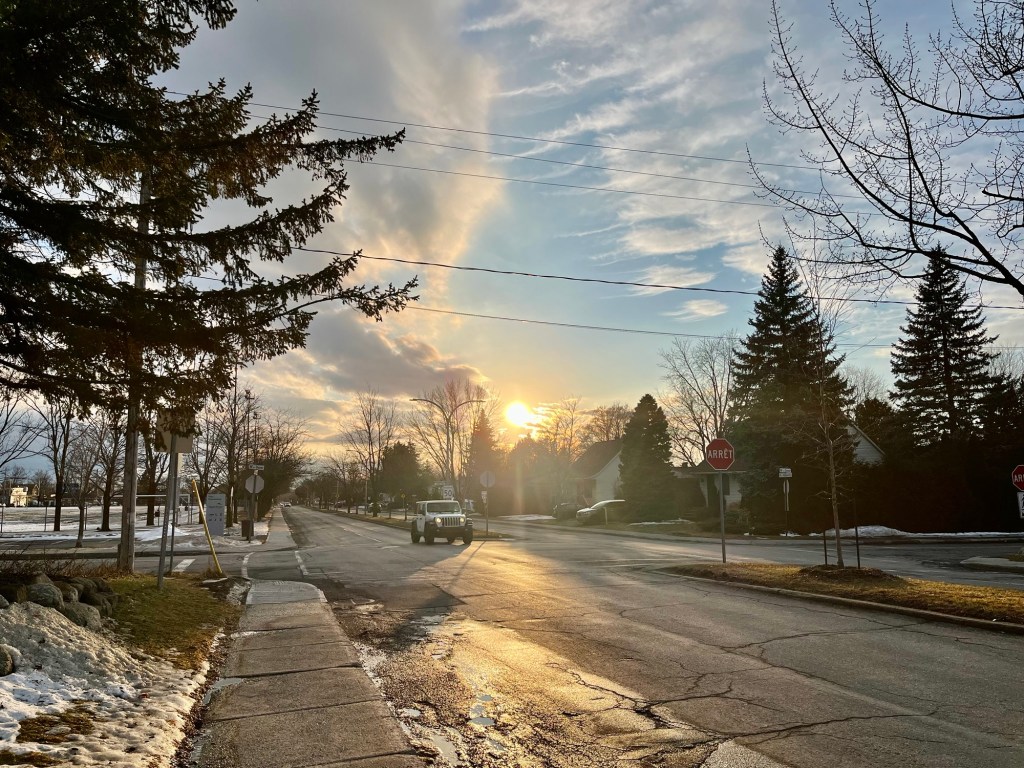
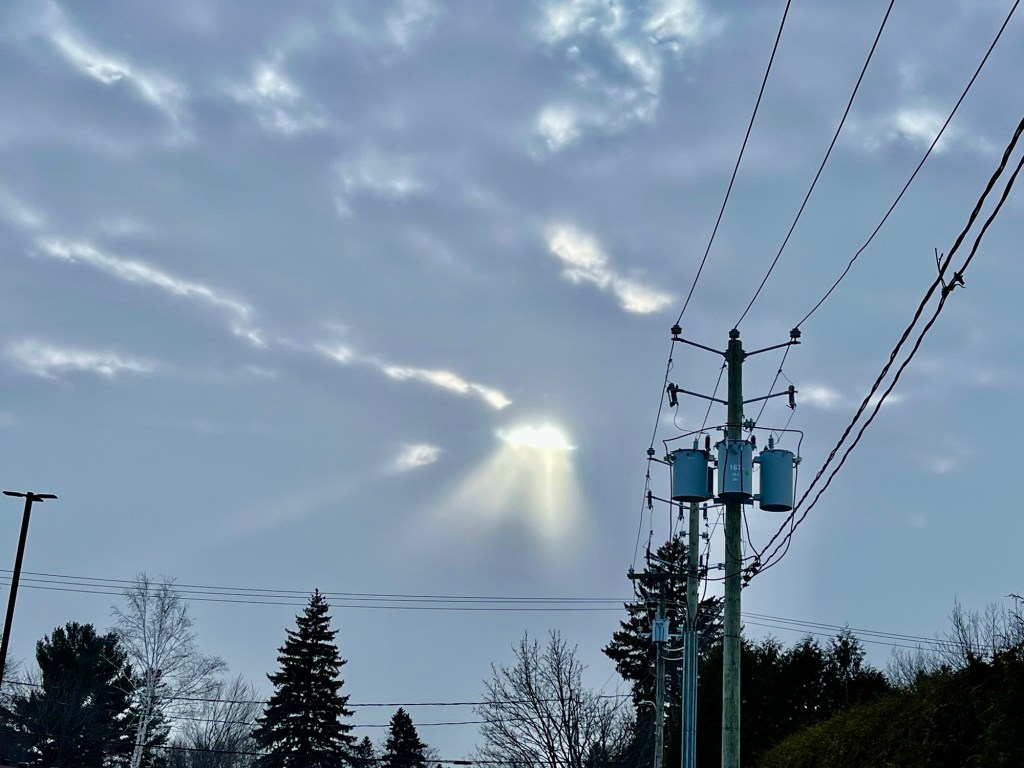
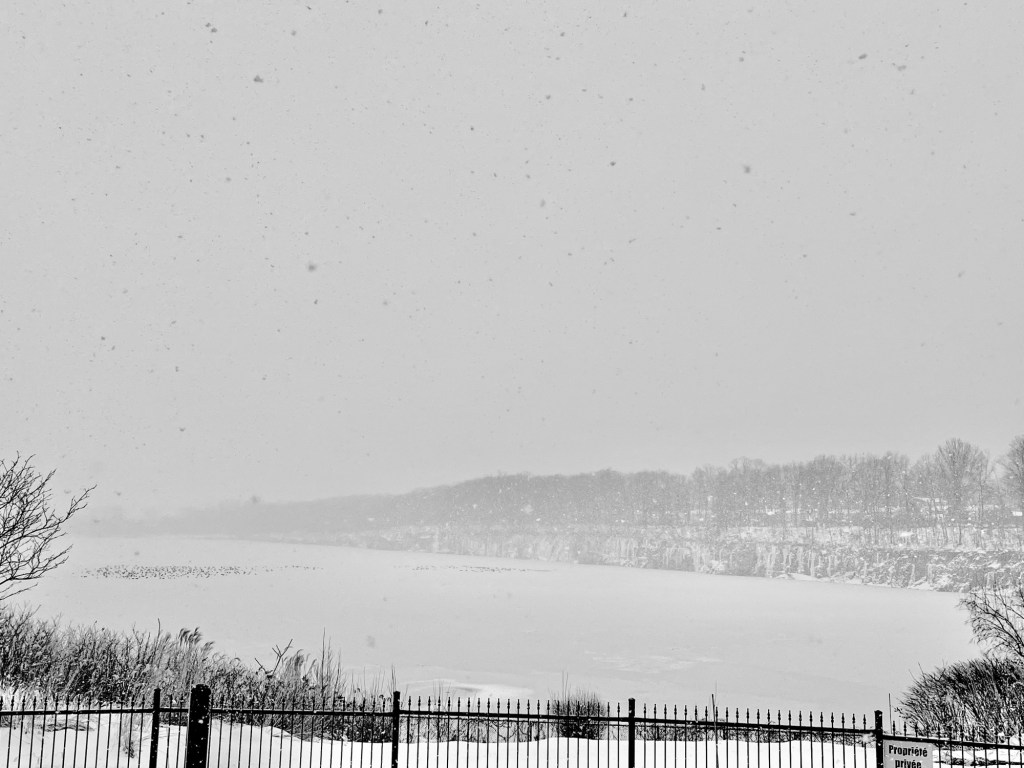
Every winter has this one day when you notice the return of light. By notice I mean physically experience and welcome with an inner sigh of relief. February 6, 2024 was such day. We haven’t had fresh snow for weeks. Instead, the January snow froze into a sleek shiny crust and every field looks now like a frozen lake. If you walk on it, it sounds like breaking glass.
I felt a lot of joy today. I hope that it radiated and warmed people around me a little. If you ask me today who I want to be, I’d say, I want you to be that woman whom people choose to stand next to in metro, because she smiles and wears beautiful earrings.
After a month of tireless efforts, Siri finally started sending me nightly reminders to open WordPress. I see it as a personal win. If Siri thinks I’m in a habit of journaling, it must be true.
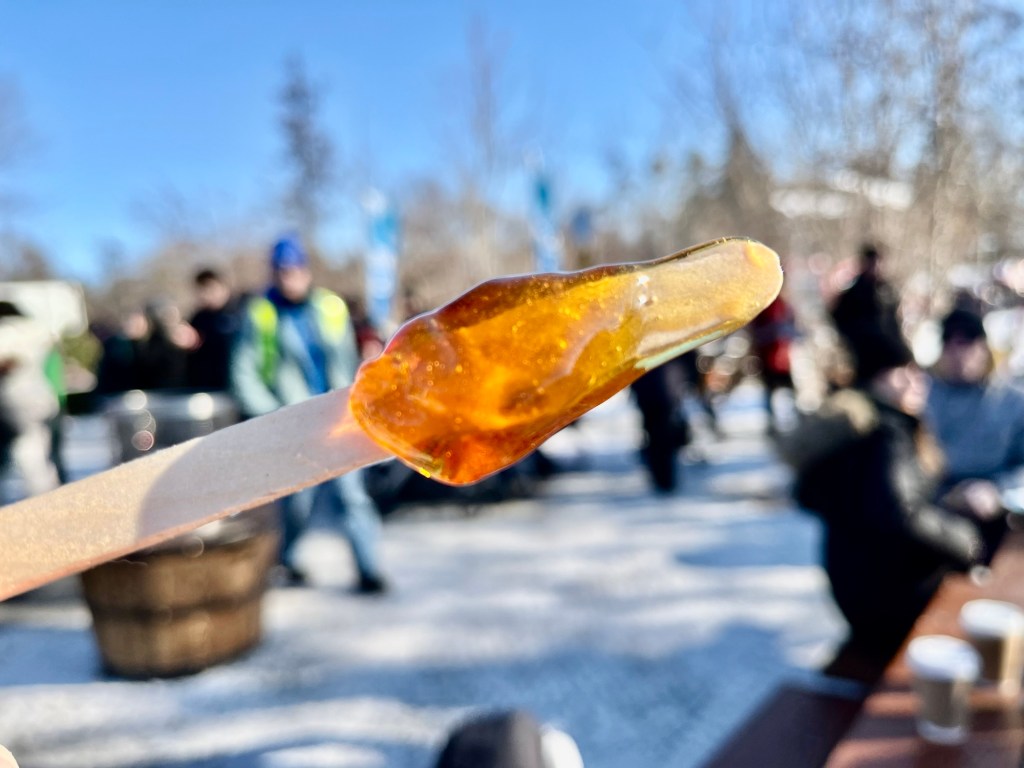
Today was an annual village fest and truly gorgeous weather, which, if I were alone, I would have rather celebrated by a long walk in the forest and around the lake. Instead, I spent the day walking between food stands, a mini farm and bouncy castles planted right in the middle of a frozen pond. In other words, I spent the day with my family and that’s a blessing to be thankful for. The other blessing was, of course, the weather: sunny, crisp delicious air with no humidity, no wind, gentle cold, just enough to colour the kids’ cheeks, but not to freeze their noses.
The reason I like village holidays is because they give me a reason to remember what the weather was like that particular year, how did it feel like outside of the daily routine. Today was beautiful.
I gave up, well, almost gave up social media because I got tired of finger pointing and constant us vs. them rhethoric. But now is a good time to reflect how this rhethoric has been showing up in my life for years. The war is an obvious example. It is so easy when your hate is legitimate, shared and justified. It is so easy to hate the bad guys, it’s what all Marvel movies are about, but then Marvel movie becomes your life and all of a sudden you’re no longer clapping. It is when the same rhethoric permeates your personal life when it becomes truly really problematic. And, I have to admit that the lines get blurred because have I truly never hurt anyone and am I hurting myself by holding on to this half-truth that it is us on one side and them on the other. So, what I want to do tonight is let them go. Them, whatever side they are on and whatever truth they are holding on to, I will let them go. I wonder how and what kind of ceremony one needs to do that. I remember, vaguely, a year ago Melanie Goodchild was speaking about letting go ceremony. I don’t have anyone who could perform it for me, so I’ll have to figure it out by myself. I have better things now, better company, including my ancestors and friends I have not yet met, I no longer need THEM, the enemy, the other side to exist and advance. I no longer have to hold on to my pain, it’s been over a year now and in kairos time it’s been so much longer. I can be on my own now. I know I can step in these boardrooms and no longer wonder if I’d ever be one of their own. I do not belong in boardrooms. I know I am there by accident and they know it too. I do not belong on the streets either. I know, I have tried. During the months of cold winter, outside, right downtown, part of the chanting crowd. I was so darn sincere, but I was never the one climbing the barricades and facing the guns, I knew I couldn’t. So, who am I? Not a soldier, not a rebel, not a corporate, not a faker. Who am I? I don’t know, but I know that when I go to the forest, it never asks me questions. It never questions my belonging. I am not a hunter, not indigenous, yet it never asks. And by the way, I hate the pronoun it. It doesn’t exist in my language. In my language, everything is he, or she, or it, but not the same it as in English, more like the German das. River is she, Earth is she, Ocean is he, Sea is it and so is the Sun. Star is she and it is also a woman’s name. Moon is, you will never believe, he. Forest is he. Mountain is she. Road is she. I often make mistakes in other languages, because it seems that one can never unlearn the gender of things one learned as a child. These things matter, because by digging deep, deeper to the roots and the mycellial networks around your roots, and to the quality of the black earth, the topsoil that in Ukraine is over one meter deep and rich enough to feed and sustain one even across the ocean, one can define oneself outside of the corporate food-chain. I just need to remember, on Monday and in two weeks that it is not us against them.
Got a call from the daycare that my son almost broke his nose
Asked my boss for something I really needed and trusted her to understand and respond to my need
Signed up for an amazing community of practice
Kept up with my coursework
Went back and forth with a bank about a mortgage
Went to massage therapy first the first time in years
Had to call 911 for someone close to me
It’s ok to feel tired and overwhelmed. It’s ok to feel like I’m crushing it, but also like things are getting too much. It’s ok to give myself a break.
I start realizing that my well-being depends in no small measure on the moments of flight, when I feel free, creative and powerful. Today wasn’t it. Today felt ordinary. The office was hot and dusty. Outside, there was a heavy sky and rain.
But when I look back on this day, I see a half dozen micro-dozes of happiness:
An invitation to Sanctuary Sangha
A reiki prayer that Rosie sent me this morning
A picture of Griffin and rainbows
An impromptu conversation about past and future with colleagues
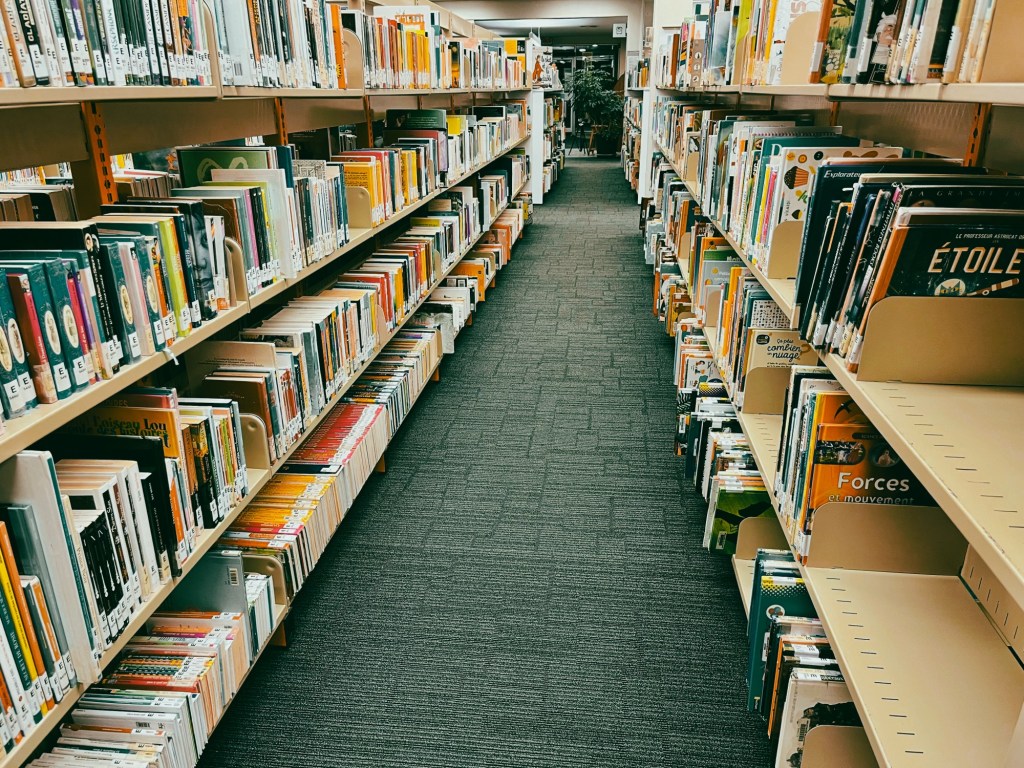
A meeting with little girl named Jeanne in the library, who introduced herself to my son: j’ai quatre ans. Personne n’a quatre ans comme moi.
And most important of all, the light is returning.
This is enough. This is more than enough. As Rosie says in her prayer: just for today.
I realize that I am tired. Not the end-of-the-day tired, although that too. I no longer feel ready to engage, read every article, pick every battle, voice every opinion. On the bright side, my FOMO is finally getting better. I’m ok with letting things go, because they never belonged to me in the first place. I’m ok with not being in the spotlight, but also I am learning to insist I be given credit when I deserve it. I’m ok with the fact that slowing down means I can’t have it all and the thought that I will never have it all is so liberating.
I was raised to be an overachiever, to work ten times more, to shoot for the stars. I always thought it was a good thing. And maybe it is, but sometimes good things destroy us. When I try to visualize this belief in doing more, being more, always fighting for something, I see a nstive weed with roots so deep, it will take tremendous force to pull them out.
It was cold and sunny today, the world is still going to hell and I had a good day. I’ve been taking care of myself in small ways, like taking a walk during my lunch break and going to my dancing class in the evening. I don’t think that the world needs more broken people and maybe I can contribute more from a place of balance and self-care.